
We Launched and It Keeps Going Down: What to Do in the First Two Weeks

October 20, 2026

If you built an app in Replit or Bolt.new and now need a real development team to take it over, the firms that turn a Replit or Bolt.new prototype into a real product fall into four groups: US engineering firms that start with a written assessment, large offshore firms with a published audit, solo senior engineers who specialize in rescues, and freelance networks. This roundup names six that say on their own websites, today, that they do this work. It covers what is specific to a Replit or Bolt app (hosting, data, secrets, getting the code out), gives a price only where the firm publishes one, and ends with a five-gate check you can run before you call anybody. Razoyo is listed first because this is Razoyo’s blog, so every other entry says where that firm beats us.
Four rules, the same ones we used in our roundup of firms that take a vibe-coded app to production.
| Firm | Best for | Where they work | Replit or Bolt offer | Starting price, if published |
|---|---|---|---|---|
| Razoyo | A fixed-price written spec before anyone touches the code | The Colony, Texas (Dallas-Fort Worth), US-wide | Production Spec that names Replit and Bolt.new | $2,500, Production Spec, fixed |
| IndiaNIC | A scored audit with a large team behind it | Ahmedabad, India, with an office in Dubai | Vibe-to-Production pages for Replit and Bolt.new | $2K to $5K diagnostic, 72 hours |
| Scopic Software | Keeping your Replit frontend and getting a real backend | Fully remote, founded in Massachusetts | Replit Experts service | Free technical assessment; project price not published |
| Red Leg Dev | One senior US engineer to get you off Replit or Bolt hosting | Lakeland, Florida, and remote | Replit Rescue and Bolt Rescue | $1,500 audit, flat |
| Groovy Web | The lowest published hourly rate | Nadiad, India, plus Berlin and Queensland | Bolt.new and Replit development pages | From $18 an hour; Bolt to production $8,000 to $25,000 |
| Replit Experts on Contra | One freelancer for a defined Replit job | Freelance network | The directory Replit’s own site links to | Not published |
Disclosure: this is Razoyo’s blog, Razoyo wrote this page, and we are biased.
Razoyo is a software engineering firm in The Colony, Texas (Dallas-Fort Worth), taking prototypes and constrained systems into production for clients US-wide since 2011. Our prototype to production page names Replit and Bolt.new directly, alongside Lovable, v0 and Cursor.
We start with a written answer, not a build quote. The Production Spec is $2,500 fixed: we audit what exists, rank the risks, and hand you findings, a remediation plan and a build estimate you can take to a budget conversation. Published timing: “typically weeks, not months.” The Spec is yours outright, so you can take it to any team on this page.
After the Spec, our pricing page lists a production build from $10,000 and support from $1,500 a month; our process page and vibe-coded app hardening cover the steps. Above the Spec, a business analyst puts a level of effort and a budget on each piece of work and gets your confirmation first. No approval, no work. On ownership: once fees are paid you own the code we write for you.
The closest proof is a marketplace Production Spec: a vacation-rental startup wanted a marketplace built, we ran the $2,500 Spec instead, and six weeks later they had a PRD and a working host-side prototype. At scale, Spider, the hotel business intelligence platform now part of Lighthouse, grew from an internal tool into a platform used by more than 10,000 people a day, and we are still its engineering team. We have also delivered systems for several Fortune 500 companies, always under NDA, so we name none of them.
Ideal for
Why they stand out Razoyo publishes its whole price ladder, which almost nobody here does, and the first paid step is a document you own.
Pros
Cons
Verdict: pick Razoyo when you want to know the real size of the job, in writing, before you commit to fixing it.
IndiaNIC is a software firm headquartered in Ahmedabad, India, with an office in Dubai. Its homepage says it was established in 1998 and lists more than 500 experts. It runs a Vibe-to-Production practice with a separate page for each AI builder, including Replit and Bolt.new.
On Replit, IndiaNIC’s point is that the editor, the runtime and the hosting are the same environment, so its first fix is putting production data and credentials where development tooling cannot reach them, then proving the backup by actually restoring it. On Bolt, its point is that the whole toolchain runs in the browser tab, so everything a server normally provides (persistence, authorization, secrets) is deferred, then arrives all at once when you leave. It recommends leaving Replit only “on evidence about traffic and roadmap, never by default.”
An NDA comes first, access is read-only and scoped to one repository, and a diagnostic of up to 49 checks returns a scored findings report in 72 hours. Prices are published as ranges: $2K to $5K for the diagnostic, $5K to $25K for a 2 to 6 week rescue, $25K to $100K+ for a full rebuild, and a $5K to $25K a month retainer.
Ideal for
Why they stand out It publishes its audit method and a price range for every step, and says when staying put is the cheaper answer.
Pros
Cons
Verdict: pick IndiaNIC when you want a structured, scored audit fast and may want a bigger team to act on it.

Scopic Software was founded in 2006 in Massachusetts and now runs as a fully remote team across the US, Europe, Latin America and APAC, with more than 280 employees according to its About page. It has a dedicated Replit Experts service aimed at teams who built an MVP in Replit and hit a wall.
Its approach is specific: “We reuse your Replit frontend and business logic while upgrading the backend.” Scopic also lists integrations with ERPs, CRMs and APIs, and says it builds with HIPAA and SOC 2 requirements in mind from the start.
Its own example: an internal intake tool prototyped in Replit in one week, then moved to a secure backend with enterprise authentication in two more, by one developer. A free technical assessment comes with the quote; no project price is published.
Ideal for
Why they stand out Its Replit page is built around reusing what you have, backed by a large team spread across time zones.
Pros
Cons
Verdict: pick Scopic when your Replit app’s frontend is the asset and the backend is the problem.
Red Leg Dev is a veteran-owned software studio in Lakeland, Florida, run by one senior engineer, Matt Wagner, who cites fifteen years of SaaS work. Its Replit Rescue and Bolt Rescue pages are the most tool-specific on this list.
The Replit page names failure modes we see too: code that assumes Replit’s runtime, credentials that live only in the Secrets panel, and an Agent that rewrites whole files and silently reverts a manual fix. The Bolt page names the other side: environment variables that never reach the real host, a database wired in late, and auth tested only in the in-browser preview. Its honest summary for Replit: “Most Replit rescues are migrations, not rewrites.”
Pricing is published: the audit is $1,500 flat with a two-week turnaround, a written report and a fixed-price quote. Most rescues run $15,000 to $50,000, and most Bolt rescues take 2 to 6 weeks.
Ideal for
Why they stand out The pages are specific tool by tool, and the audit is the lowest flat fee on this list.
Pros
Cons
Verdict: pick Red Leg Dev when the app is small, the main job is getting it off Replit or Bolt hosting, and you want one senior person accountable.
Groovy Web was founded in December 2015 in Nadiad, Gujarat, India, where it is headquartered, with offices in Berlin and Queensland and, by its own count, more than 100 in-house staff. Its Bolt.new development page lists “Bolt prototype to production upgrade” first, and a matching Replit page lists “Replit prototype to production migration.”
Dedicated resources start at $18 an hour. Bolt-to-production conversion runs $8,000 to $25,000, taking 1 to 2 weeks for a simple app and 6 to 10 weeks for a marketplace or multi-tenant platform. On Replit, a basic migration runs $8,000 to $18,000, and full production engineering $18,000 to $40,000. There is a one-week risk-free trial.
One useful idea on both pages: keep prototyping new features in Bolt or Replit Agent, then have them reviewed, tested and merged into the production codebase through Git.
Ideal for
Why they stand out It publishes an hourly rate, price bands and timelines, which makes it the easiest firm here to budget against.
Pros
Cons
Verdict: pick Groovy Web when budget is the binding constraint and you have someone who can manage an offshore team.
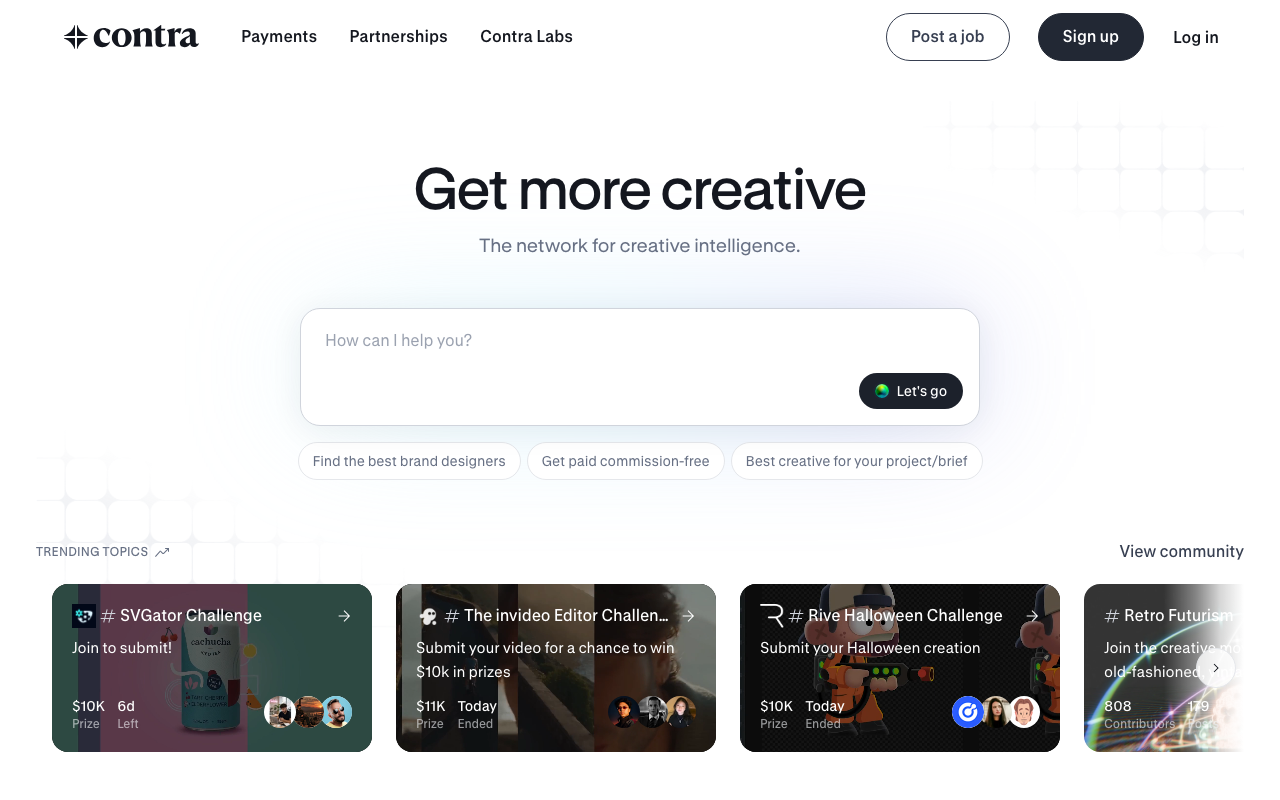
Contra is a freelance network, not a development agency. Replit’s own website links its “Replit Experts” menu item to a Replit Experts directory on Contra, at contra.com/replit. When we checked, the directory listed 171 experts and 247 hires, with profiles from Bozeman, Montana to Lahore, Nairobi and Lagos.
Contra says freelancers on it work commission-free, and you can post a job or message an expert directly. The directory does not say how experts are selected or publish rates, so treat each profile as a person to interview, not a credential.
Most of these experts build inside Replit. That suits a defined job (a feature, a bug, a deployment problem), less so deciding whether the app should stay on Replit at all.
Ideal for
Why they stand out It is the directory Replit itself points to, and it is the fastest way to find someone who already works in Replit every day.
Pros
Cons
Verdict: pick a Replit Expert on Contra when you have the technical judgment in-house and need one defined job done in Replit.
A Replit app is three things in one place, the code, the hosting and the database, so taking it over means separating them on purpose. From Replit’s own documentation:
DATABASE_URL contains neon.tech, you are on that setup; check which database your live app uses.A Bolt app was built in a browser tab, so the work is moving it onto infrastructure you control and checking its database rules. From Bolt’s own documentation:
.bolt.host address and custom domains need a Pro plan; projects published before August 14, 2025 went to Netlify. Its hosting FAQ says that if you hit your hosting limits, your site “will stop displaying publicly” until usage resets.Yes, you can export the code from both tools, and no, the export is not the whole app. What does not travel with the code is the running database, the secrets, the domain and the account the app is published from. The Twelve-Factor App gives a useful test for the secrets part: could your codebase “be made open source at any moment, without compromising any credentials”? If the answer is no, rotating keys is the first job, before anyone else gets a copy.
Before you hand anything over, list the GitHub repository and its owner, the database and how to copy its data, every secret by name (not value), the domain, and the account the live app runs under.
A Cursor-built app is usually further along, because Cursor is an AI code editor and the code already lives in your own repository. The risks are different: large agent changes accepted without a careful read, secrets committed to git history, and architecture that drifted one fast decision at a time. Red Leg Dev, IndiaNIC and Razoyo all take Cursor-built apps; the five gates below apply unchanged, starting with the git history.
Run Razoyo’s Five-Gate Production Check against your app before you call anybody, then fix the gates that fail, in order. These are the gates from our vibe-coded roundup, written out for Replit and Bolt. Each gate is pass or fail, and every fail is a line item on the quote you are about to receive.
key, secret, password and token. On Replit, compare the Secrets tool with the Production app secrets in Publishing settings; on Bolt, check that every external key sits in a server function’s secrets and not in client code. A credential in the code is a fail, and rotating it is job one.Four or five gates passed means hardening, often without leaving Replit or Bolt. Two or fewer means a rebuild of the core. For the full version, our AI-generated code audit checks the same ground across seven dimensions and returns it as a Production Spec.
Published prices run from a $1,500 audit to $100K+ for a full rebuild; your number depends on how much of the data model survives review.
| Firm | First paid step | Fix or build | Ongoing |
|---|---|---|---|
| Razoyo | $2,500 Production Spec, fixed | Production build from $10,000 | Support from $1,500 a month |
| IndiaNIC | $2K to $5K diagnostic | $5K to $25K rescue; $25K to $100K+ rebuild | $5K to $25K a month |
| Scopic Software | Free technical assessment | Not published | Not published |
| Red Leg Dev | $1,500 audit, flat | Most rescues $15,000 to $50,000 | Not published |
| Groovy Web | One-week risk-free trial | Bolt $8,000 to $25,000; Replit $8,000 to $40,000 | From $18 an hour |
| Replit Experts on Contra | Not published | Not published | Not published |
Distrust any build price given before someone reads your code. See what it costs to take an AI-built prototype to production.
Fix it, unless the data model is wrong. The workflow, the intent and the rough shape of the data are usually worth keeping, and Red Leg Dev and IndiaNIC say the same about Replit and Bolt apps. Rewrite when the database structure cannot support what the product has to do, when the app depends on things that only exist inside Replit’s runtime or a browser sandbox, or when nobody can trace the current state back to an intentional decision. See rewrite versus refactor and who takes over software someone else built.
Can a Replit app run in production? Yes, once production is separated from development. Replit now gives every published app a separate production database that Agent cannot modify, and published apps run on Google Cloud. The work is usually backups, secrets, tests and a release you can reverse, not a move.
Can a Bolt.new app be used as a real product? Yes, after someone checks the database rules and moves secrets into server functions. Bolt’s own documentation says anyone who visits your site can send requests to your database directly, and a table without row level security can be read and changed by anyone.
Do I have to move my app off Replit or Bolt hosting? Not necessarily. Many apps are well served staying put once production data, backups and releases are handled properly. Move when traffic, cost, hosting limits or the size of your team make the platform the constraint, not by default.
How do I get my code out of Replit or Bolt? Both tools offer a zip download and a GitHub connection. Replit’s own guide says the database and the web address do not copy over automatically. Bolt’s GitHub integration can only be connected by the project owner, and disconnecting it is permanent.
How much does it cost to turn a Replit or Bolt prototype into a real product? Published prices start at a $1,500 flat audit from Red Leg Dev and run to $100K+ for a full rebuild at IndiaNIC. Groovy Web publishes $8,000 to $25,000 for a Bolt-to-production conversion. Razoyo publishes a $2,500 fixed Production Spec and a production build from $10,000.
Should I rewrite my prototype into real software or fix it? Fix it unless the data model cannot support the product. The workflow and intent a prototype captures are usually worth keeping. Rewrite when the app depends on things that only exist inside Replit’s runtime or a browser sandbox, or when nobody can explain why the code is the way it is.
Who can take over an app built in Cursor? Any firm that reads code carefully, because a Cursor app already lives in your own repository. Red Leg Dev, IndiaNIC and Razoyo all take Cursor-built apps. Start by reviewing the git history for committed secrets and large agent changes nobody read.
If your Replit or Bolt app already has paying users and you cannot say for certain where the production data lives, who can read it, or how you would get it back, that is the exact conversation we have on a first call. We will walk the five gates against your app, tell you which ones fail, and say whether it needs a $1,500 audit somewhere else, a Production Spec from us, or nothing yet. Schedule Free Consultation
Paul Byrne is President of Razoyo, a software engineering firm in The Colony, Texas taking prototypes and constrained systems into production since 2011.
These links open AI platforms with pre-written prompts about this page.
We use cookies to improve your experience. Do you accept?
To find out more about the types of cookies, as well as who sends them on our website, please visit our cookie policy and privacy policy.

