


Upwork Alternatives When You Need a Team That Owns the Result (2026)

October 29, 2026

If you run a league, club or association and want to build a booking and membership platform, you have three kinds of option: buy a product made for clubs, start on a marketplace engine you can extend with code, or hire a development firm to build your own. This roundup names six, says who each fits, and gives a price only where one is published. Razoyo is listed first because this is Razoyo’s blog, so every other entry says where that option beats us.
One honest warning: most clubs should not build anything. With one location and standard membership tiers, an off-the-shelf product does the job for a few hundred dollars a month, and two of the six entries are exactly that. Custom wins in four situations: franchising, rules that differ by location, money split between several parties, and a marketplace with two sides.
| Option | Best for | What it is | Where | Price, if published |
|---|---|---|---|---|
| Razoyo | A written, fixed-price answer to “build it or not” before any budget is committed | Software engineering firm | The Colony, Texas (Dallas-Fort Worth), US-wide | $2,500 System Spec, fixed; production build from $10,000 |
| CourtReserve | Racquet and paddle clubs that should not build at all | Off-the-shelf club management software | St. Augustine, Florida | $159 to $499 a month billed annually; multi-location priced on request |
| Sharetribe | Testing a two-sided marketplace before paying for custom code | Marketplace software plus a network of vetted experts | Helsinki, Finland | $39 a month to build and test; $199 a month billed yearly to go live |
| RaftLabs | Sports facilities with booking rules a product cannot model | Custom booking and sports software firm | India and Ireland | Projects from $10,000 |
| Codica | A marketplace MVP from a firm that specializes in marketplaces | Marketplace development firm | Tallinn, Estonia | Not published |
| Gigabit | A marketplace that splits payments between several providers | Offshore software firm | Dhaka, Bangladesh, and Wyoming | Embedded engineers $3,000 to $7,500 a month; project price not published |
Disclosure: this is Razoyo’s blog, and we are biased.
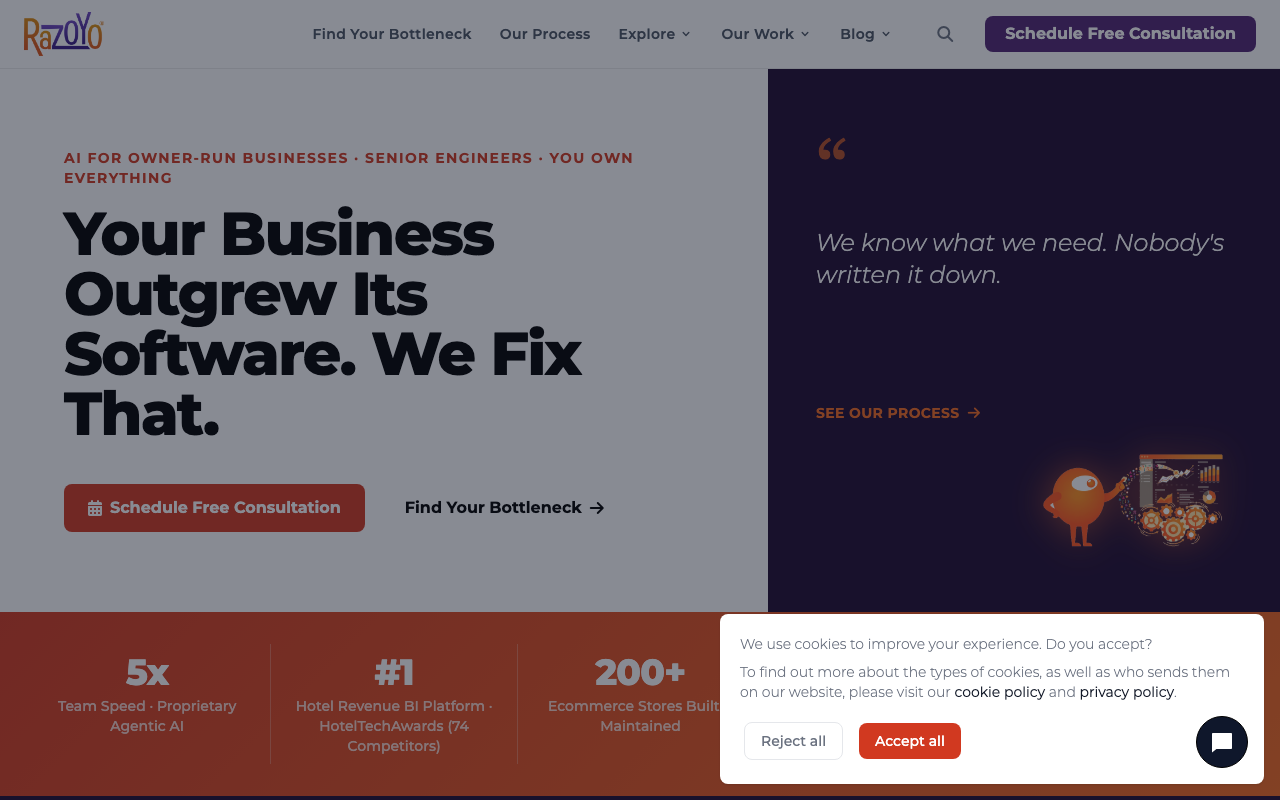
Razoyo is a software engineering firm in The Colony, Texas, in the Dallas-Fort Worth area, serving clients US-wide since 2011. The work is taking prototypes and constrained systems into production. We have delivered systems for several Fortune 500 companies, always under NDA, so we name none of them.
We do not quote a booking platform on the first call. We start with a System Spec: $2,500 fixed, time-boxed, two or three working sessions that produce a product brief, a PRD, a senior-engineer build estimate and a plain build or don’t-build recommendation. The document is yours whether or not you build with us.
The proof is on that page. POWER Pickleball League, a franchising league, needed to know what a new membership platform would cost before committing. Three working sessions over seventeen days produced a complete product brief, a full requirements document, epics and a senior-engineer build estimate. The number came back larger than she had in mind, and we did not shave it to make it easier to sign. She took the finished Spec to a development partner who could fund the build against a specification that was already done.
The second is a marketplace spec. A vacation-rental startup wanted a two-sided, direct-booking marketplace built. We ran a $2,500 fixed-fee Production Spec instead of quoting the build. The product brief arrived ten days after kickoff, the PRD two weeks after that, and within six weeks they had a working prototype of the host side on Elixir and Phoenix LiveView. The most they had at risk the whole time was $2,500.
Above the Spec, the ladder is on our pricing page: a working MVP from $5,000, a production build from $10,000, support from $1,500 a month. A business analyst puts a level of effort and a budget on each piece of work and gets your confirmation first. No approval, no work. Once fees are paid you own the code we write for you.
Ideal for
Why they stand out
Razoyo publishes its whole price ladder and puts a fixed-price written decision in front of any build. “Don’t build this” is a stated possible answer, and POWER Pickleball League chose not to fund its build with us.
Pros
Cons
Verdict: pick Razoyo if your rules are unusual enough to need a written estimate and an honest “build or don’t” before real money moves.
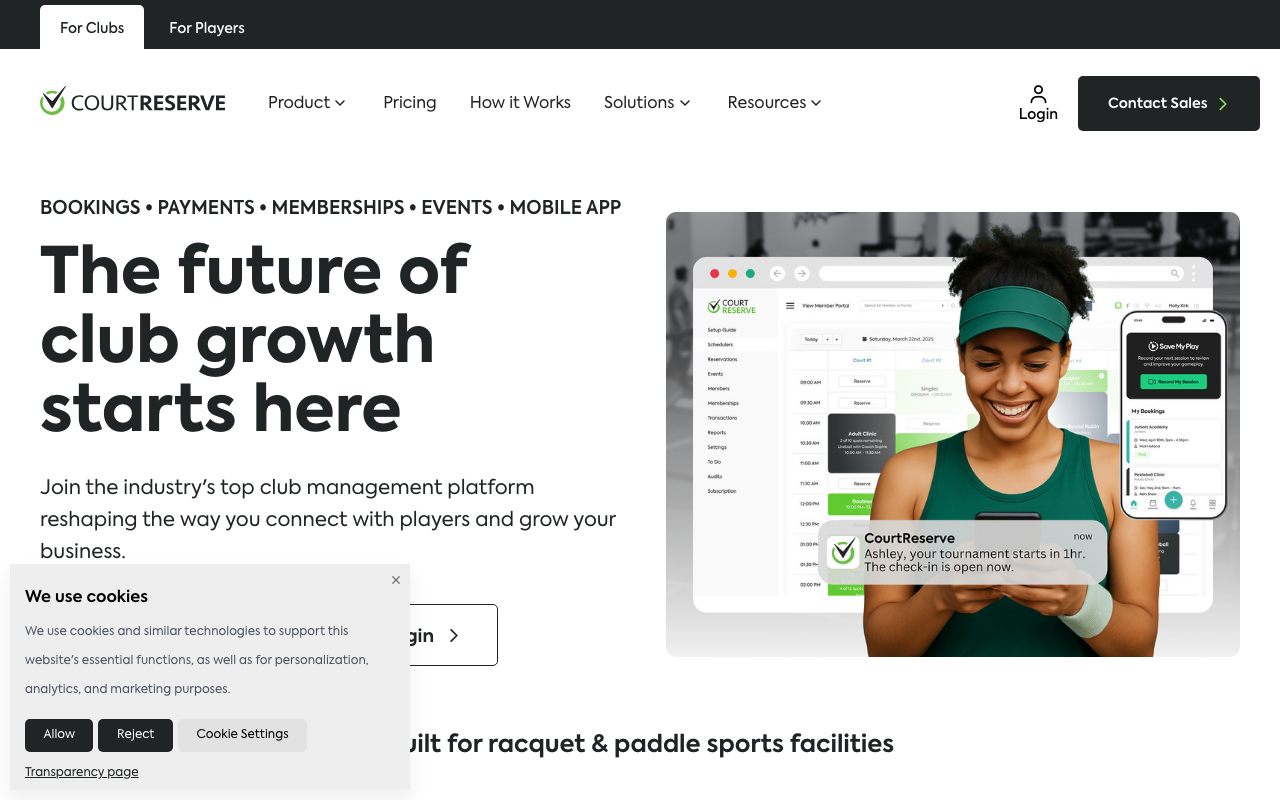
CourtReserve is not a development firm. It is club management software, here because for most clubs it is the right answer. Its site calls it “the court booking software behind 2,300+ tennis, pickleball, and padel facilities,” covering bookings, payments, memberships, events and a mobile app.
It also publishes its prices. Launch covers 8 courts at $159 a month billed annually ($199 monthly), with court booking and lessons, events, membership management, reporting, public booking and payments. Advance covers 16 courts at $329 ($369 monthly) and adds API access and flex leagues. Momentum covers 32 courts at $499 ($549 monthly) and adds branded domains and a branded mobile app.
Under the plans sits the line a growing organization needs: “Need more courts, have multiple locations, or want network memberships? Contact us for Custom pricing.” Multi-location exists; its price is not public. Get it in writing before you assume you need a build.
Ideal for
Why they stand out
It is built for this sport category, publishes its prices, and already has the features a club would otherwise pay to build.
Pros
Cons
Verdict: pick CourtReserve if you run a racquet or paddle club and your rules fit a product; most do.
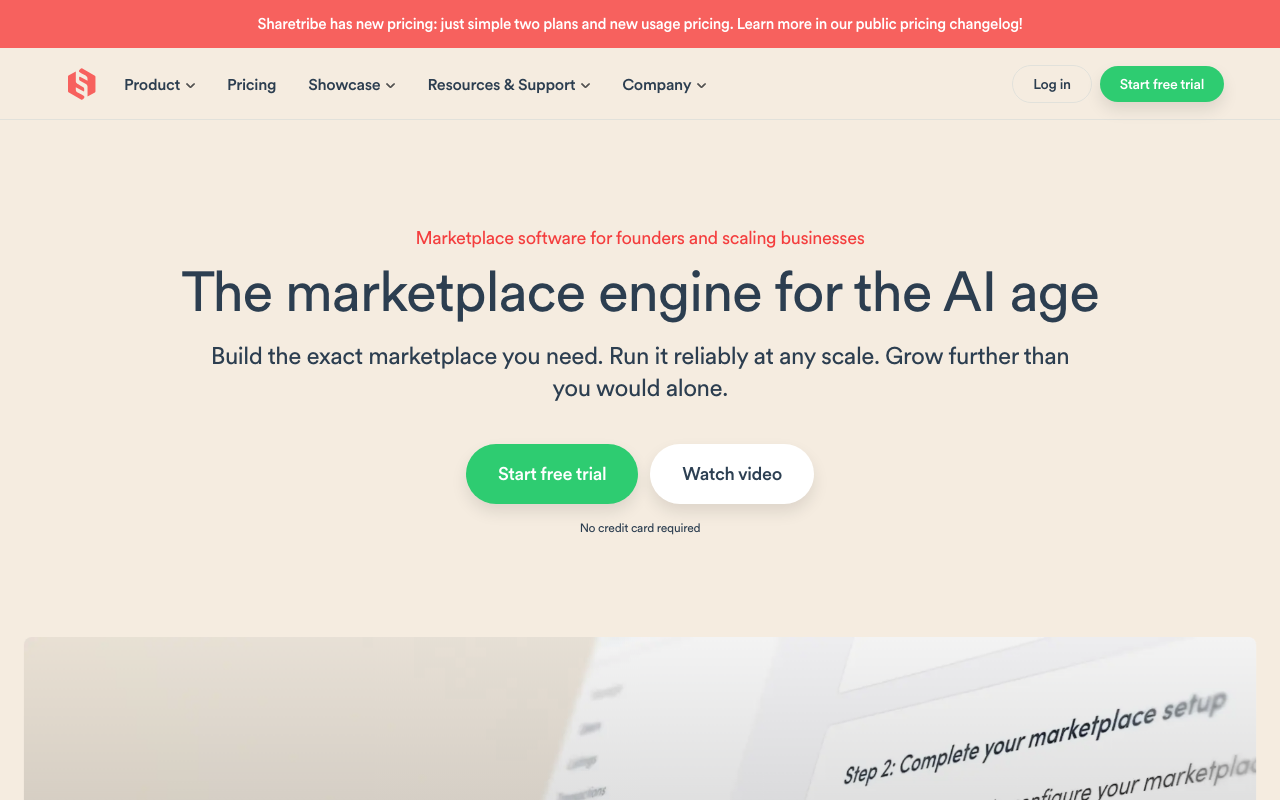
Sharetribe is marketplace software from Helsinki, Finland, and the honest first stop for a booking marketplace with two sides: coaches and players, venues and leagues, hosts and guests. It says it powers more than 1,500 marketplaces and that you can “Launch your marketplace in a day without coding,” then “Extend infinitely with code.”
The booking parts are built in: provider availability, bookings by the hour, day or night, and fixed slots. Payments run through Stripe, and Sharetribe handles the split: “Split payments between the supplier and your marketplace. Charge a commission from your customers, providers, or both.” Stripe holds the customer’s payment until the transaction is over.
Pricing is public: the Build plan is $39 a month for building and testing, and the Live plan is $199 a month billed yearly ($259 monthly), with no transaction fees and usage above one million credits a month billed separately. When the template stops fitting, Sharetribe is headless, and its Expert Network lists vetted freelancers and agencies who customize it.
Ideal for
Why they stand out
It replaces the costliest part of a marketplace build, the payments and transaction engine, with a published monthly fee.
Pros
Cons
Verdict: pick Sharetribe if the question is still “will this marketplace work”, and you want the answer for hundreds of dollars, not tens of thousands.
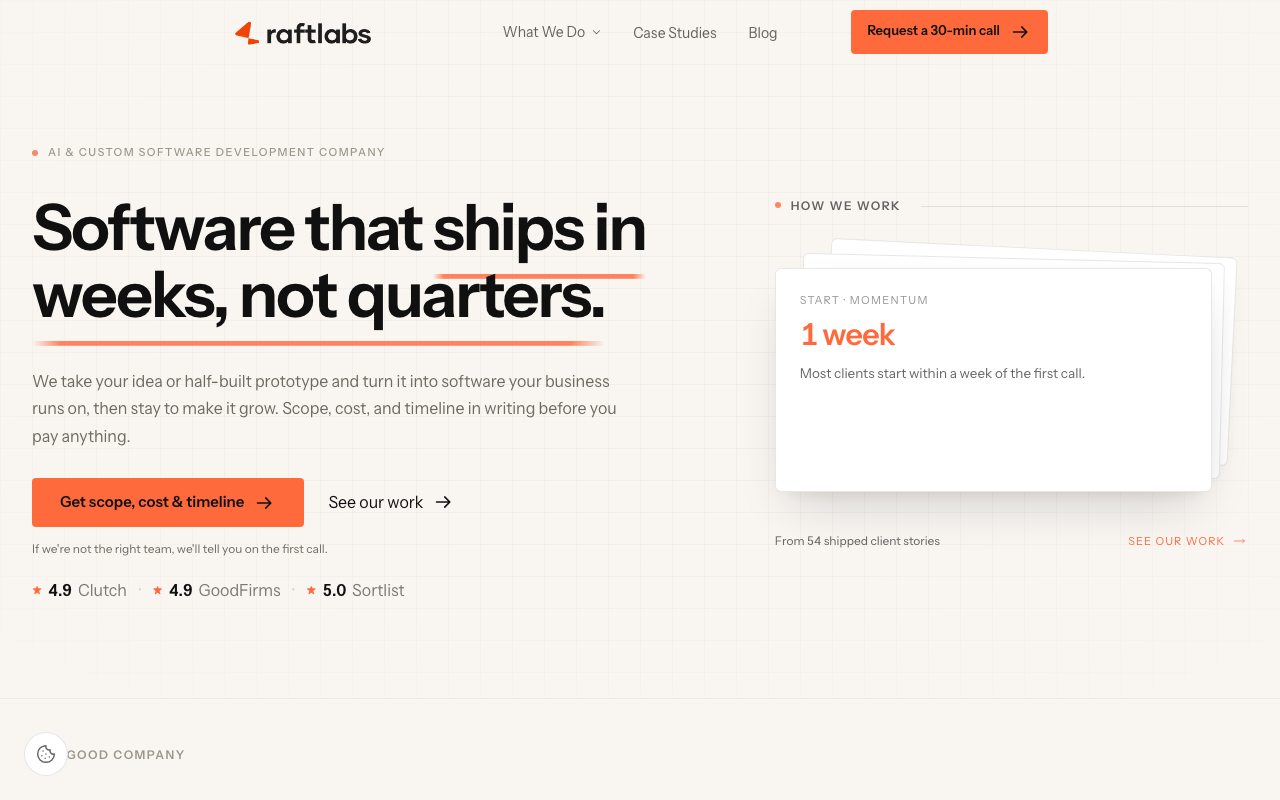
RaftLabs is a custom software firm founded in 2015, based in India and Ireland, with more than 50 people. Its sports and fitness page offers custom software “for facilities, academies, leagues, and clubs”: facility booking with membership credits and peak pricing, membership management with multi-location access control, and league and tournament management.
It earns its place by saying when not to hire it. Its booking page starts its list of recommendations with “Choose a maintained product when it handles the core workflow,” and its sports page says “One venue with simple memberships rarely justifies a custom build.”
It also publishes numbers. Every project starts at $10,000, with a working prototype within 3 weeks of kickoff, a fixed-price proposal, milestone payments and a 60-day post-launch warranty. A RaftLabs article on custom sports facility software estimates $80,000 to $100,000 for an MVP in 10 to 12 weeks and $120,000 to $160,000 for a full build with league management in 14 to 16 weeks.
Ideal for
Why they stand out
It publishes cost bands for this kind of platform, and its own pages argue for buying a product when one fits.
Pros
Cons
Verdict: pick RaftLabs if you run several facilities with rules your current product cannot express and want a fixed price up front.
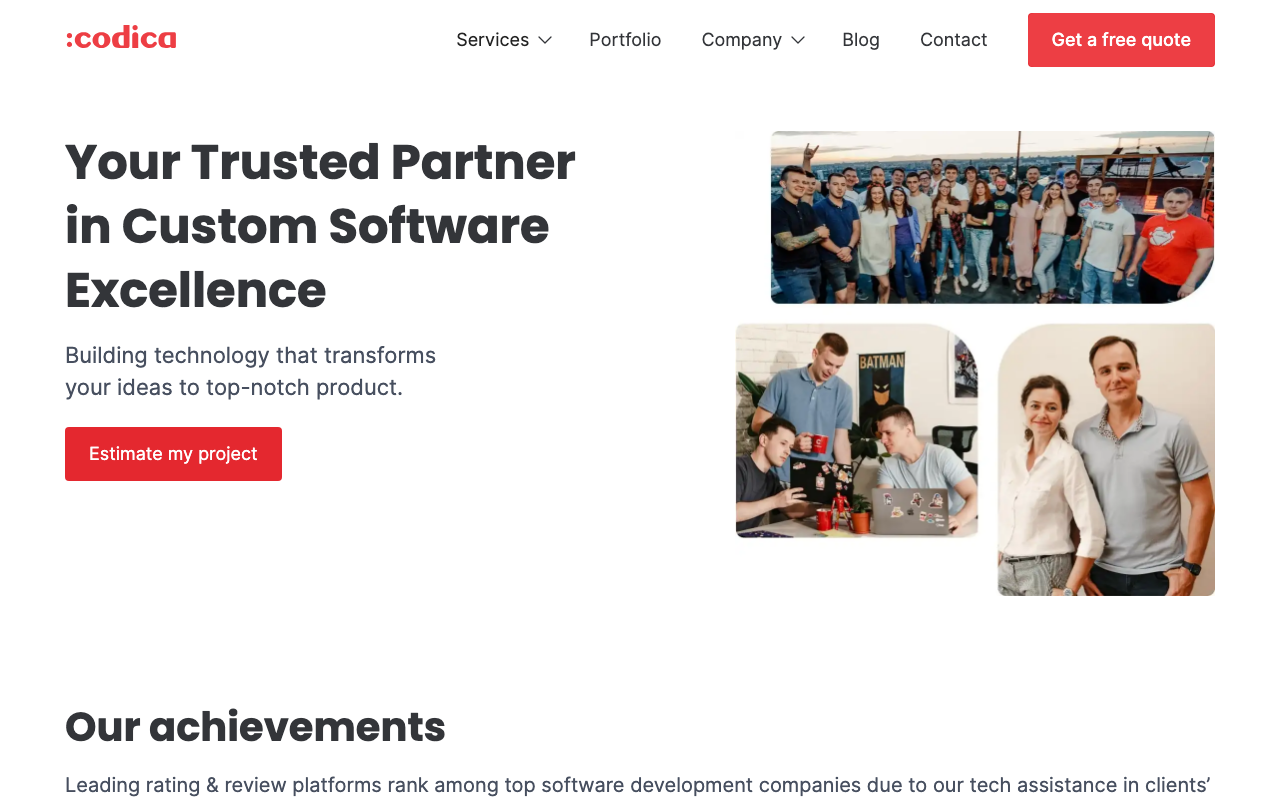
Codica is a custom software firm with its address in Tallinn, Estonia, and online marketplace development is the first service on its site. Booking platforms and rental sites are among the marketplace types it lists, with a process from prototyping through testing and support after launch.
Its most relevant case study is PlanMyKids, a booking marketplace that connects parents with nearby kids’ activity providers. Codica says it narrowed the MVP features through prototypes, and the client says the MVP came in under budget, “which for a bootstrapped company was important.” The team was seven people (project manager and business analyst, designer, two back-end, one front-end, DevOps and QA) on Ruby on Rails, React, Redis and AWS, built as a progressive web app to save the cost of separate mobile apps.
Ideal for
Why they stand out
Marketplaces are its headline service, and its booking case study shows the team shape and stack, which most firms do not publish.
Pros
Cons
Verdict: pick Codica if you are launching a booking marketplace and want a team whose main business is marketplaces.
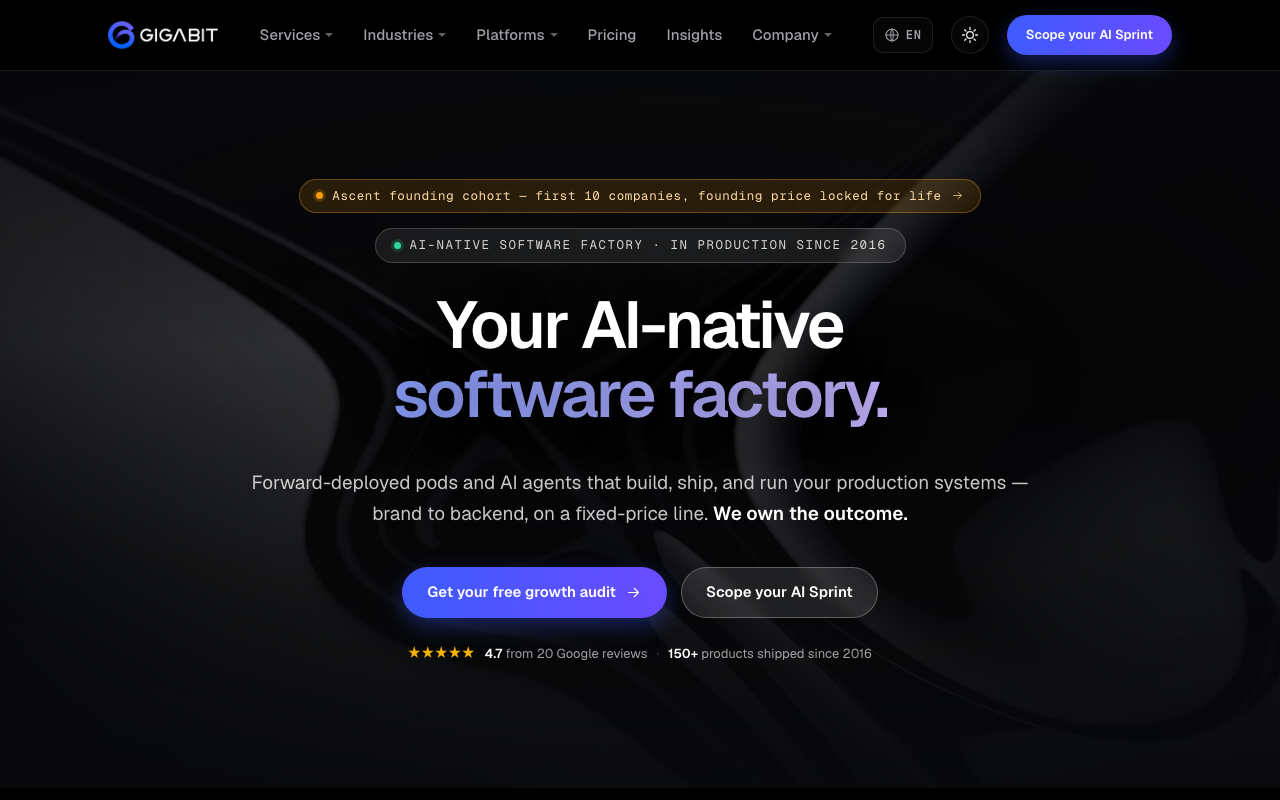
Gigabit calls itself an “AI-native software factory,” building software from Dhaka since 2016, with hubs in Wyoming and Dhaka and more than 150 products shipped. Most of its site is now about AI agents, but it publishes one of the most detailed two-sided marketplace case studies we found.
The client was a US-based pre-seed marketplace connecting corporate event planners with independent vendors, where one event needed five to eight vendors booked in one cart. Gigabit says it spent weeks 1 and 2 on the data model, then used Stripe Connect destination charges: each booking is its own charge with an automatic transfer to the vendor, and the platform keeps its commission. It added 48-hour payment holds with dispute handling. Its reported figures: a $72,000, 14-week build, then $2.4 million in gross merchandise value and $360,000 in commission in year one.
Ideal for
Why they stand out
It names the hard part, split payments across several providers, and explains how it was solved, with a budget and timeline attached.
Pros
Cons
Verdict: pick Gigabit if money has to move between several parties on every booking and you want a firm that has published how it did that.
Yes, almost always. It is cheaper, and someone else keeps it running. Three products cover most of the ground:
Do the math first. Five years of CourtReserve’s top published plan at the annual rate is about $30,000. The published estimates here for a full custom sports or marketplace platform start at $72,000, before anyone runs it.
A custom platform wins when the rules that make you money cannot be expressed in the product, and the difference is worth owning software for. For clubs, leagues and associations, that is four situations.
| Situation | Try off the shelf first | Custom wins when |
|---|---|---|
| Franchising | WildApricot’s multi-chapter setup; CourtReserve’s network memberships, priced on request | The franchisor and each franchisee need different fees, rules and reporting on shared member records, or the platform is part of what you sell to franchisees |
| Rules that differ by location | CourtReserve’s custom multi-location pricing | A membership carries quotas, privileges or pricing across sites that the product cannot model |
| Money split between several parties | Sharetribe’s commission split through Stripe | One payment has to be divided among a franchisor, a location and a coach, by rules that change by location |
| A marketplace with two sides | Sharetribe | Supply-side verification, syncing inventory from systems providers already use, or a transaction flow the template cannot model |
Payment splitting is the item most people underestimate. Stripe’s Connect charge types documentation says the charge type “determines how the funds are distributed between your platform, the connected account, and Stripe,” and which account is debited for refunds and chargebacks. Its separate charges and transfers guide is the model that “helps marketplaces split payments between multiple parties.” Choose it before the code, because it decides who carries disputes.
And keep card numbers out of your own system. The PCI Data Security Standard applies to any entity that stores, processes or transmits cardholder data, so a custom platform should hand card entry to the processor’s hosted fields.
A firm that first checks whether you need a replacement at all, or only a layer beside the product you run. Razoyo’s Fit Spec is $2,500 fixed and maps where the platform stops fitting, what a custom layer must cover and what it would take to build. The middle option, in that page’s words, is “build the layer that fits”: keep the product for what it does well and build only the part it cannot model, such as franchise reporting.
A full replacement makes sense when the workarounds have become the system: staff copy records between locations by hand, or a spreadsheet decides who pays whom. See when the spreadsheet became the system and who takes over software someone else built.
Published numbers only, beside the product prices above:
Codica quotes after a conversation. The spread from $5,000 to six figures follows the rules you need modeled, which is why the spec comes first. More in what it costs to take a prototype to production.
The vacation-rental marketplace spec opened with four questions, none of them about code, and every one changed what got built. These five, built from that spec and from how our System Spec runs, tell a league, club or association whether to buy or build. Answer them on one page before you call anyone, us included.
Score it plainly. One-line answers to questions 1 and 2: buy a product. A split in question 1, rules that differ by location in question 2, or two sides in question 4: get a written spec before any build quote.
Who can build a booking and scheduling platform for a membership organization? Custom software firms that publish booking or membership work, such as RaftLabs for sports facilities, Codica for booking marketplaces and Razoyo, which scopes the platform in a fixed-price $2,500 System Spec first. Before hiring any of them, check whether a product such as CourtReserve, WildApricot or LeagueApps already fits.
Should our club buy booking software or build its own? Buy, unless your rules cannot be expressed in a product. A single location with standard membership tiers fits off-the-shelf software for a few hundred dollars a month. Build when franchising, rules that differ by location, payment splits or a two-sided marketplace make the product a workaround.
We outgrew our off-the-shelf software. Who can build us a custom replacement? A firm that first checks whether you need a replacement or only a layer beside the product you have. Razoyo’s Fit Spec is $2,500 fixed and maps where the platform stops fitting, what a custom layer must cover and what it would take to build.
How do I hire a software team to build a marketplace platform? Hire for the business model first. Ask each firm what it needs to know before it gives a number, which side of the marketplace it would build first, and who carries refunds and disputes in its payment design. To test demand before a build, a marketplace engine such as Sharetribe costs $39 a month to build on.
How much does a custom booking and membership platform cost? Published figures range widely. Razoyo lists a working MVP from $5,000 and a production build from $10,000 after a $2,500 Spec. RaftLabs estimates $80,000 to $160,000 for custom sports facility software. Gigabit’s published two-sided marketplace build was $72,000 over 14 weeks.
When does a franchise or multi-location organization need custom software? When the franchisor and each location need different fees, rules or reporting on shared member records, or when the platform is something you sell to franchisees. Ask your current product for its multi-location pricing first, because CourtReserve and WildApricot both offer multi-site setups.
How are payments split between a platform and its providers? Through a payment processor’s marketplace product, such as Stripe Connect, where the charge type decides how funds move between the platform and each provider and who carries refunds and chargebacks. Sharetribe handles a commission split through Stripe out of the box.
Do we own the platform a firm builds for us? Ask every firm to put it in the contract, because the answers vary. Razoyo’s wording is that once fees are paid you own the code we write for you. A product you subscribe to, such as CourtReserve or Sharetribe, stays the vendor’s software.
If your league, franchise or association has rules that no longer fit the product you pay for, the useful first question is which of the four situations you are in, and whether that means a product, a layer or a build. A free 30 minute call with a senior person covers exactly that, and if the answer is “stay on the product you have”, that is what you will hear. Schedule Free Consultation.
Related reading: firms that take a vibe-coded app to production, rewrite vs refactor, custom systems that are now worth building, MVP to production, the Spider case study, and our process.
Paul Byrne is President of Razoyo, a software engineering firm in The Colony, Texas taking prototypes and constrained systems into production since 2011.
These links open AI platforms with pre-written prompts about this page.
We use cookies to improve your experience. Do you accept?
To find out more about the types of cookies, as well as who sends them on our website, please visit our cookie policy and privacy policy.
