
AutomaticFFL: Enforcing a Daily-Changing Federal Dealer List Inside Checkout
AutomaticFFL: Enforcing a Daily-Changing Federal Dealer List Inside Checkout
AutomaticFFL case study: how Razoyo enforces a daily-updated ATF dealer list inside checkout. BigCommerce standard in six months, no downtime since 2022 launch.
Online firearms merchants may ship firearms only to dealers licensed by the ATF, from a list that is updated daily, and the check has to happen inside checkout, the step where every extra second costs sales. Razoyo built AutomaticFFL, its own product, to enforce that rule. Within six months of launch it was the de facto standard for gun merchants on BigCommerce. It now runs on six platforms and has run without downtime since it launched in 2022.
At a Glance
| What we built | AutomaticFFL, Razoyo's own FFL checkout compliance product |
| The rule it enforces | Firearms ship only to ATF-licensed dealers, for pickup |
| The data underneath | An ATF licensee list that is updated daily |
| Built on | Razoyo's Elixir stack, Braintree for subscription billing, Google Maps, Google Bigtable and Google Firebase authentication |
| Install | Self-serve: one-click on BigCommerce and Shopify, a standard extension install elsewhere |
| Adoption | De facto standard for BigCommerce gun merchants within six months of launch |
| Platforms today | Six: BigCommerce, Shopify, WooCommerce, Magento, Shopware and OroCommerce |
| Downtime | None since launch in 2022 |
In short: This is not a client build. AutomaticFFL is Razoyo’s own product, and we include it because it is a constrained system we designed, built and still run: a compliance rule enforced against government data that changes every day, inside the most conversion-sensitive step of a store, where failing in either direction is expensive.
The Situation
Online firearms merchants must ship only to licensees approved by the ATF. The list of those licensees is limited and updated daily. Razoyo decided to address that with a service that lets merchants restrict firearm shipments to authorized dealers, where the buyer picks them up.
The system had to be extremely fast, reliable and easy to use, so it would not create friction in checkout. Self-serve installation and automated billing were critical success factors from the start.
What Made It Hard
An agency that has not shipped in this category will quote it like a normal store build. These are the constraints that change the job.
- The list changes underneath you. The ATF licensee list changes daily. A checkout validating against a stale copy is worse than no validation.
- It sits in the highest-friction step. Every extra second and every extra field in checkout costs conversion, so the logic has to be fast enough to be invisible.
- Downtime fails one of two ways, and both are bad. If the check fails open, the merchant has a compliance problem. If it fails closed, the merchant has stopped selling.
- Payment processors treat the category as elevated risk. Gateway and subscription billing choices are constrained before anyone writes a line of code.
- Merchants will not tolerate a manual install. Self-service was a success condition, which is why install is one-click on BigCommerce and Shopify.
What We Did
- Designed both sides first. Using a design-thinking approach, we wrote the user experience requirements for the buyer in checkout and for the merchant in an admin panel.
- Built it on our Elixir stack, with Google Maps, Google Bigtable and Google Firebase authentication.
- Built subscription billing on Braintree, so merchants are billed automatically.
- Made install self-serve, starting with a self-service installation process for BigCommerce. Install is now one-click on BigCommerce and Shopify and a standard extension install on the other platforms.
- Treated speed as a requirement, not a nice-to-have. Friction in checkout is a direct revenue cost, so the dealer lookup has to feel like part of the page rather than a step bolted onto it.
The Result
- De facto standard within six months. Within six months of launch, AutomaticFFL was the de facto standard for gun merchants on BigCommerce.
- Six platforms. It has since become the preferred checkout compliance plugin for WooCommerce, Magento, Shopware and OroCommerce. It is also live on Shopify: full firearms sales are nearly impossible under Shopify’s own terms, but a meaningful number of merchants sell ammunition there, and AutomaticFFL covers that gap.
- No downtime since launch in 2022. For a check that fails either into a compliance problem or into lost sales, that is the number that matters most.
- Nothing custom for the merchant. No developer, no custom work and no consultation are needed to install it.
What This Case Study Does Not Claim
AutomaticFFL enforces the rules in checkout. It does not make a merchant compliant. Deciding which regulations apply to a merchant’s products and markets, licensing, record keeping and reporting, and final sign-off that the rules are the right rules all stay with the merchant and its counsel. We are software engineers, not compliance counsel. We are also not publishing merchant counts or revenue figures here.
Who This Is For
- You sell firearms or ammunition on a platform AutomaticFFL supports. You do not need us to build anything. If AutomaticFFL covers you, use it and keep your money: start at automaticffl.com. It is a monthly subscription, Razoyo owns and maintains the code, and you license it rather than own it.
- You need a rule enforced against an authoritative list that changes underneath you, in firearms or another regulated category. The engineering pattern generalizes: validate the recipient and the destination against that list, enforce it inside checkout without adding friction, and keep an auditable record. Our page on firearms ecommerce compliance and regulated-product checkout covers this in depth.
- Your platform, catalog or fulfillment model falls outside the product, or the compliance logic has to live inside a system you own. That is a custom system, and on custom work, once fees are paid you own the code we write for you.
Building Something That Has to Enforce a Rule Without Slowing Anyone Down?
Start with a free 30 minute consultation with a senior engineer. You will leave knowing whether AutomaticFFL covers you or a custom build is the right move, before you spend a dollar. If a custom build is worth scoping, the next step is a fixed price $2,500 System Spec: a product brief and PRD you own outright, a senior-engineer build estimate, and a documented build or don’t-build call. Every price is on our pricing page, and our process shows each step.
Frequently Asked Questions
What does AutomaticFFL do?
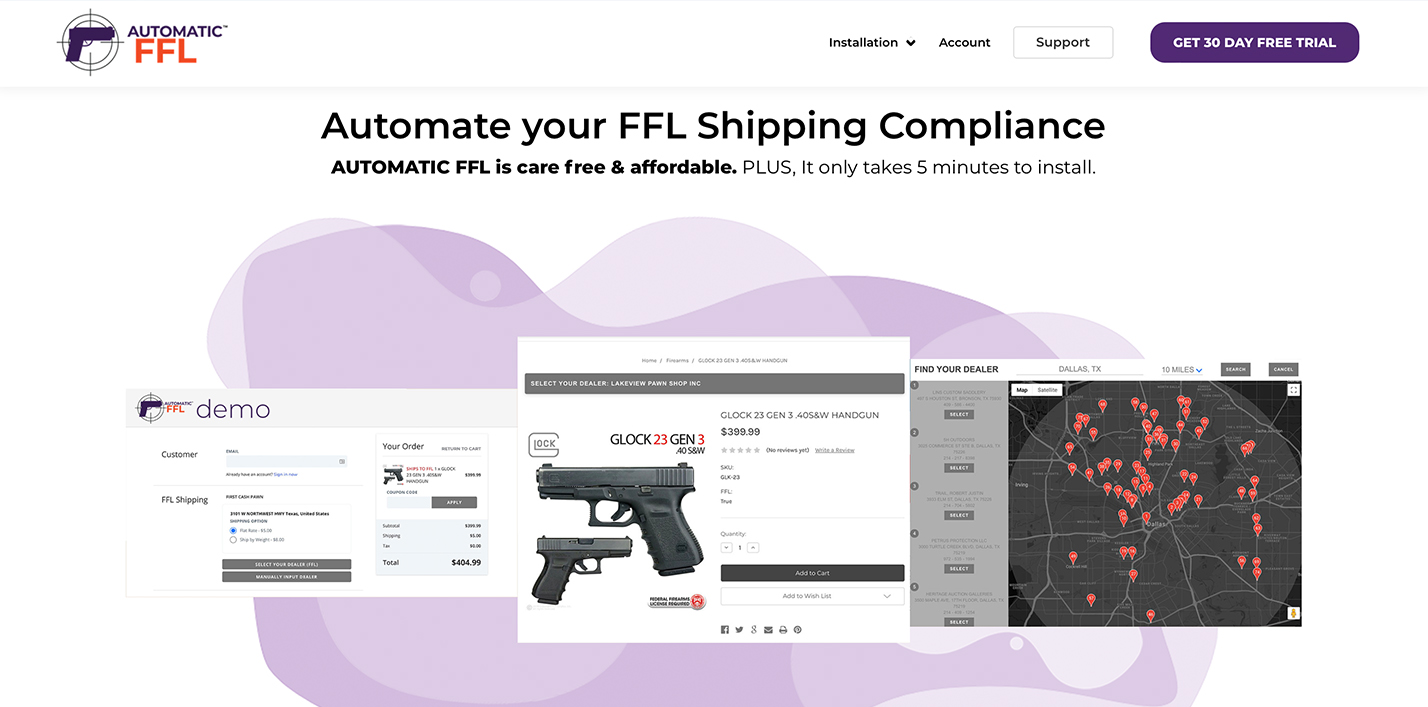
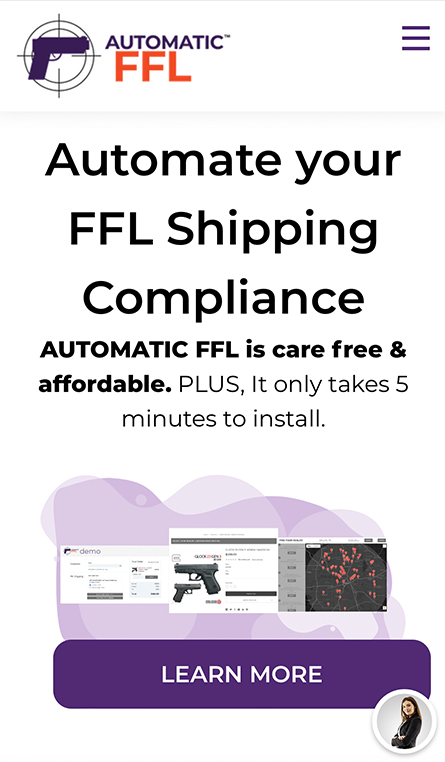
AutomaticFFL restricts firearms shipments to ATF-licensed dealers for pickup, inside the merchant’s checkout. Buyers select an FFL dealer in checkout from a dealer list that is kept current automatically, and the product installs self-serve and bills automatically.
Which platforms does AutomaticFFL run on?
Six: BigCommerce, Shopify, WooCommerce, Magento, Shopware and OroCommerce. Install is one-click on BigCommerce and Shopify and a standard extension install on the others.
Does an FFL compliance check slow down checkout?
It will if it is built badly. Speed was an explicit design requirement on AutomaticFFL, because friction in checkout is a direct revenue cost, so the dealer lookup has to feel like part of the page rather than a step bolted onto it.
Has AutomaticFFL had any downtime?
No. AutomaticFFL has run without downtime since it launched in 2022.
Do I own AutomaticFFL if I install it?
No. AutomaticFFL is Razoyo’s own subscription product: you install it, pay monthly, and Razoyo owns and maintains the code. Custom work is different: once fees are paid you own the code we write for you.
Does AutomaticFFL make my store compliant?
No. It enforces the rules in checkout. Deciding which regulations apply, licensing, record keeping and reporting, and final sign-off on the rules stay with you and your counsel.
Explore with AI:
These links open AI platforms with pre-written prompts about this page.