

Who Builds Custom Warranty and Service Portals? 6 Options Compared (2026)

November 14, 2026

If you sell firearms, ammunition, alcohol, tobacco or anything else with a legal rule attached, you need compliant checkout for firearms and other regulated products: a checkout that enforces who may buy, where it may ship and who must receive it, without making honest buyers give up halfway. Some of that you can buy for under $100 a month. Some of it has to be built. This roundup compares six options: two agencies that build whole firearms stores, a firm that builds the enforcement itself, a dealer lookup service for developers, an age verification service and a compliance platform for beverage alcohol. Razoyo is listed first because this is Razoyo’s blog, so every other entry says where that option beats us.
None of this is legal advice. The software enforces the rules you give it. Which rules apply to your products and your markets is a question for your compliance counsel.
| Option | What it is | The regulated part it handles | Published price |
|---|---|---|---|
| Razoyo | Software engineering firm, The Colony, Texas, since 2011; built AutomaticFFL | FFL dealer routing (its own product), or custom enforcement of any rule against a changing list | AutomaticFFL from $99 a month; custom work starts with a free consultation, then a $2,500 fixed System Spec |
| Folio3 | Ecommerce agency, certified Shopify Plus and BigCommerce partner | Whole firearms store: rule-based checkout, age checks, FFL transfer routing, state shipping logic | Not published; typical firearms project 8 to 16 weeks |
| MAKDigital | Ecommerce agency since 2012, family-owned | Whole firearms store with age verification and FFL integrations, plus firearms SEO and marketing | Not published |
| FFL API | FFL dealer lookup API and checkout widget | Dealer search by ZIP code and radius, checkout dealer selection | From $99 a month per site, 14-day free trial |
| AgeChecker.Net | Online age verification service | Minimum age at checkout, with rules by location | $25 a month plus 50 cents per accepted verification |
| Sovos ShipCompliant | Beverage alcohol compliance platform, since 2006 | Direct-to-consumer shipping compliance, license tracking, tax rates, reporting | Not published (demo on request) |
Disclosure: this is Razoyo’s blog, and we are biased.
Razoyo is a software engineering firm in The Colony, Texas (Dallas-Fort Worth), serving clients US-wide since 2011. We take prototypes and constrained systems into production, and regulated checkout is a constrained system: a legal rule, enforced against government data that changes every day, inside the step of a store where every extra second costs sales.
We know that because we built a product for it. AutomaticFFL is our own FFL checkout compliance product. It restricts firearms shipments to ATF-licensed dealers, where the buyer picks them up, from an ATF licensee list that is updated daily. Within six months of launch it was the de facto standard for gun merchants on BigCommerce. It now runs on six platforms, including BigCommerce, Shopify, WooCommerce and Shopware, installs self-serve (one click on BigCommerce and Shopify) and has run without downtime since it launched in 2022. On its own site, plans start at $99 a month after a 30-day free trial.
So the first thing we will tell you is to buy it if it fits. Our firearms compliance checkout page says it plainly: “If AutomaticFFL covers you, use it and keep your money.” The second option is a custom build, for when your platform, catalog or fulfillment model falls outside the product, or the compliance logic has to live inside a system you own. That is a custom system, and the pattern carries beyond firearms: validate the recipient and the destination against an authoritative list that changes underneath you, enforce it inside checkout without adding friction, and keep an auditable record.
We are also clear about the line. We build the enforcement; deciding which regulations apply, licensing, record keeping and reporting stay with you and your counsel.
Ideal for
Why they stand out
Razoyo has shipped a product in this category and runs it, so it quotes regulated checkout as a different engineering problem, not as a normal store build. It will also tell you when its own product, not a build, is the answer.
Pros
Cons
Verdict: pick Razoyo when the rule is the hard part: either AutomaticFFL covers it for a monthly fee, or the enforcement has to be built and has to hold.
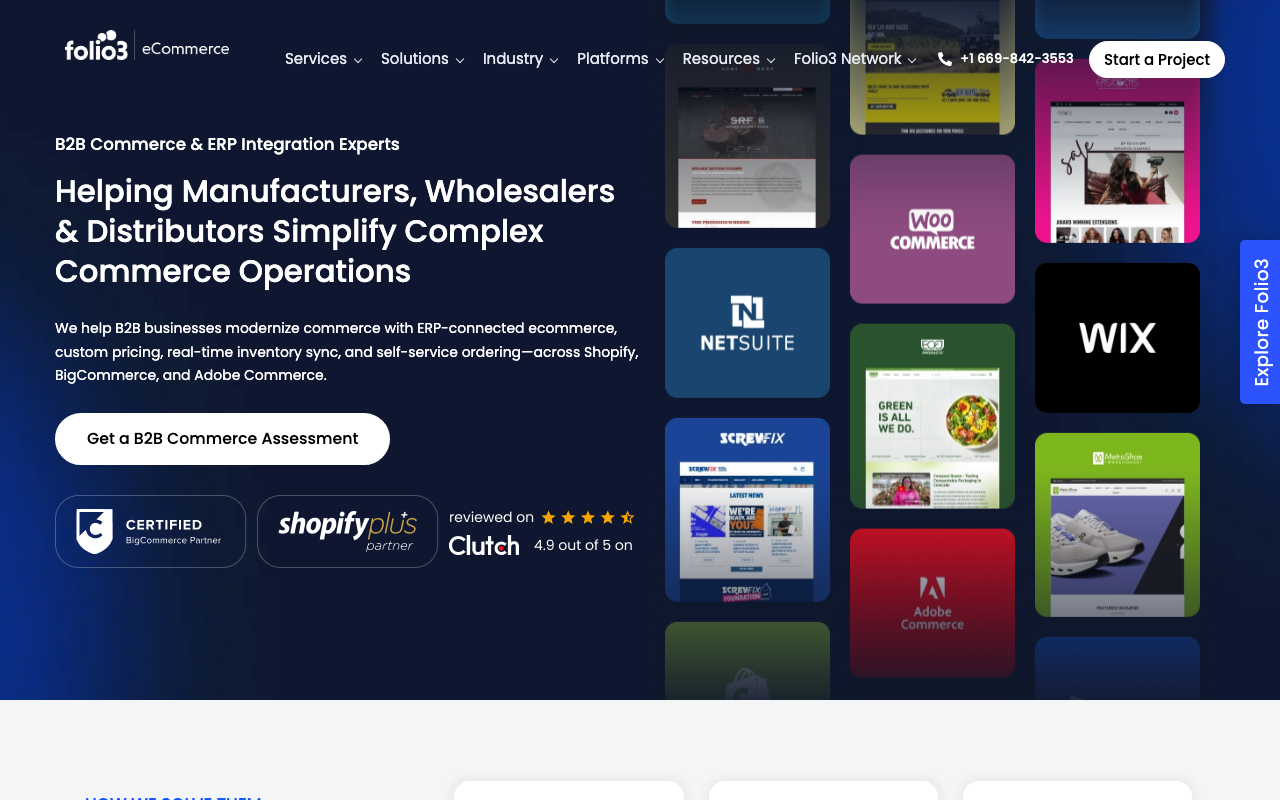
Folio3’s ecommerce arm runs a firearms ecommerce practice for gun stores, manufacturers and distributors, built “for ATF compliance, FFL transfers, age verification” on Shopify, BigCommerce and WooCommerce. It describes itself on that page as a certified Shopify Plus and BigCommerce partner.
The page is specific about the regulated work: rule-based checkout by product type and regulatory category, age and identity verification at checkout, state-specific logic for shipping and sales restrictions, and FFL transfer routing, tracking and documentation. It also lists the store around it: distributor inventory sync with Sports South and Lipsey’s, split checkout for regulated and non-regulated items in one order, and payment gateways including Authorize.net, Braintree and NMI.
It publishes a timeline rather than a price: a standard firearms website design and development project “typically takes 8 to 16 weeks,” covering design, development, compliance configuration, integration and testing. Folio3 is part of a wider network that also works on ERP, AI and custom software, so a store that needs back-office connections has one place to ask.
Ideal for
Why they stand out
Folio3 covers the regulated rules and the rest of the store in one firearms-specific scope, on the three platforms most gun stores already use.
Pros
Cons
Verdict: pick Folio3 when you need a whole firearms store with the compliance rules built in, on Shopify, BigCommerce or WooCommerce.
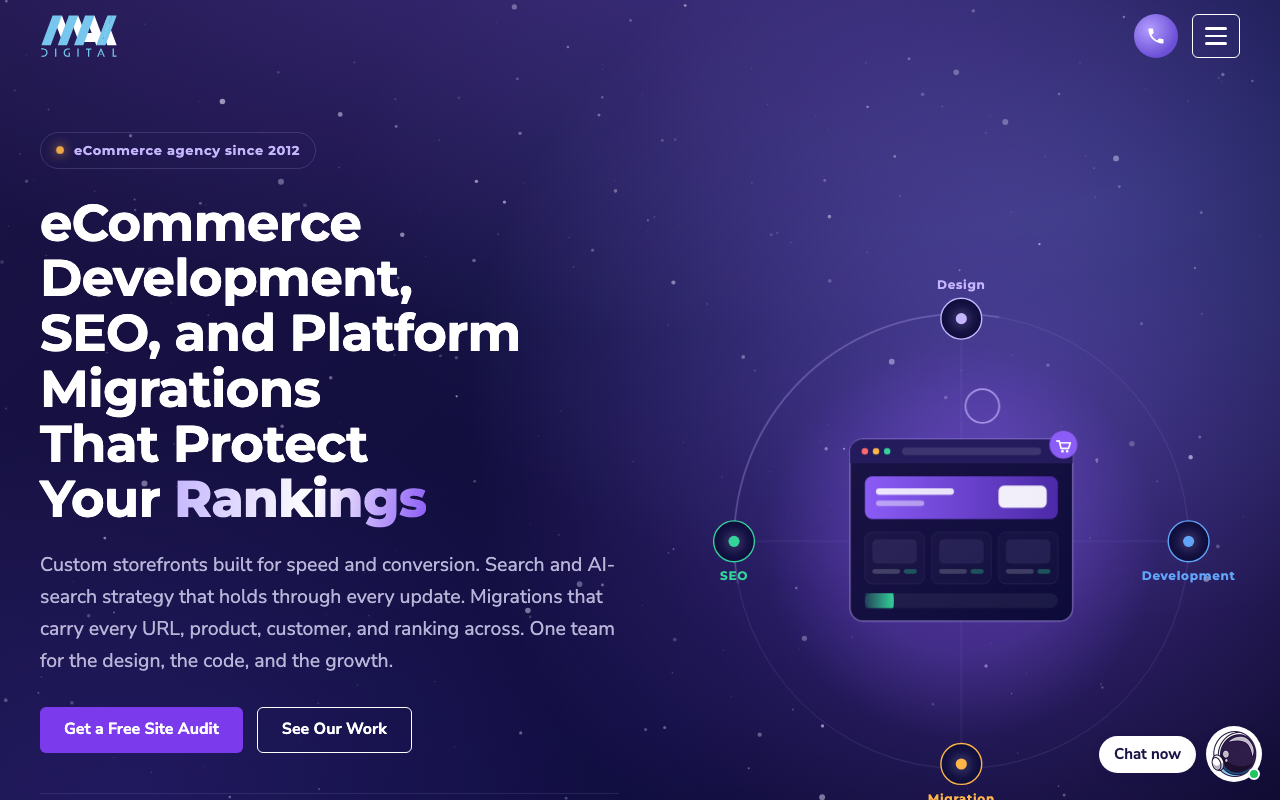
MAKDigital is an ecommerce agency (its homepage says “since 2012”) that calls itself “a family-owned and operated award winning digital agency with deep roots in the firearms industry.” Its firearms web development page says it has worked with firearms manufacturers, gun and ammunition stores and ammunition distributors “for over a decade,” building stores from the ground up and redesigning existing ones.
The regulated features it names are age verification, FFL integrations and secure checkout, and its portfolio, by its own description, features “custom-built age verification, FFL integrations, secure checkout.” What sets it apart from the other agencies here is the marketing side: firearms SEO, paid search and content, in a category where, as the page puts it, strict advertising bans and limited access to mainstream channels make buyers hard to reach. It also writes about helping brands open their own stores after years of selling only on third-party marketplaces such as GunBroker.com.
The page quotes a client of six years who valued working with a team that did not object to the industry. For a firearms business that has been turned away by vendors before, that is a real criterion.
Ideal for
Why they stand out
MAKDigital pairs firearms store development with firearms-specific SEO and advertising, which matters in a category that cannot buy traffic the usual way.
Pros
Cons
Verdict: pick MAKDigital when you want a firearms store and the marketing to fill it, from a team that knows the category.
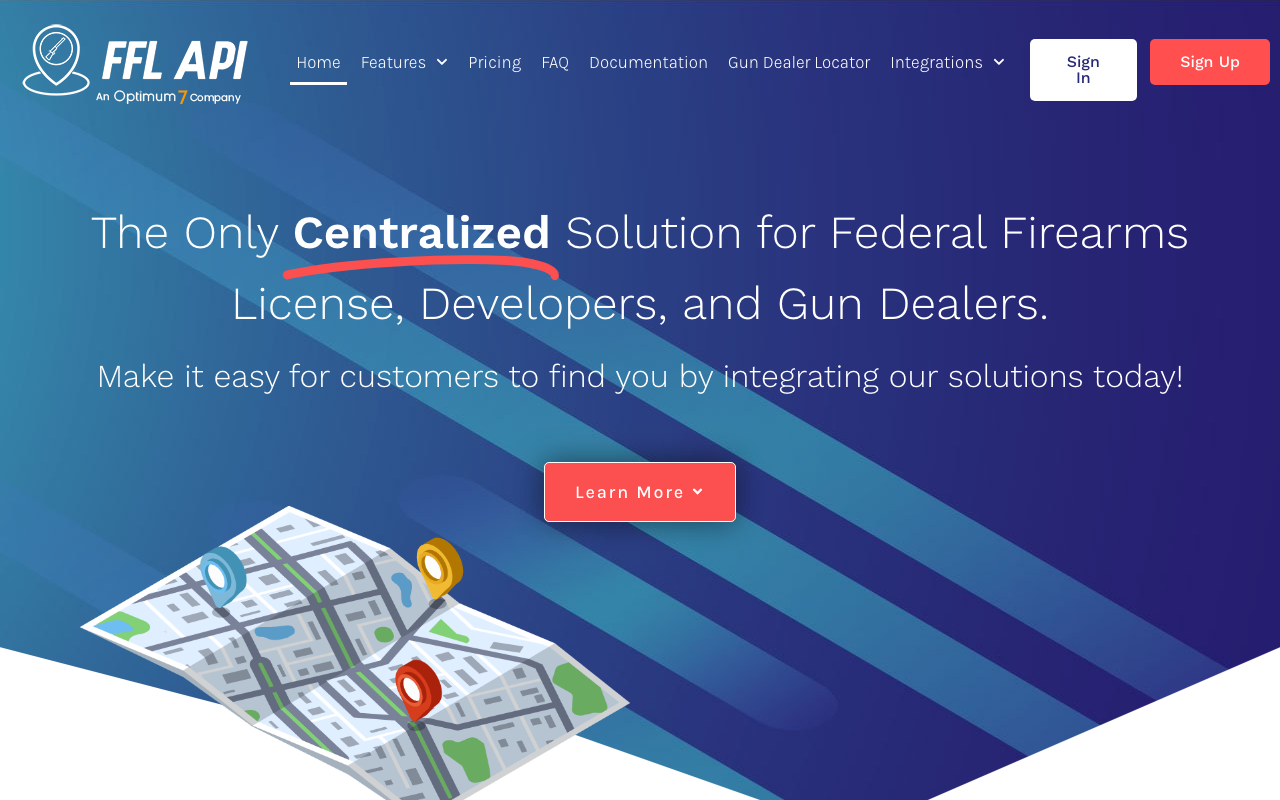
FFL API is a service, not a firm you hire: an API and widgets for finding federally licensed dealers. Its homepage lists a ZIP code API that finds FFL dealers “with a simple query” from a ZIP code and a radius, an FFL locator widget that shows dealers on a map, and checkout integrations so that buyers “just select your dealer.” It has listed integrations for BigCommerce and WooCommerce, and its FAQ says it works with “every system with iframe compatibility, with small modifications.”
The FAQ also tells dealers that a store must be in the ATF’s own FFL eZ Check list to appear, which is a sensible anchor for the data. Prices are published per site: from $99 a month for 6,000 requests a day, with higher tiers for more traffic and a 14-day free trial. Its logo marks it as an Optimum7 company.
It is a direct alternative to AutomaticFFL for dealer selection, and the starting prices are the same, so price both. The difference is the shape: FFL API is built for developers who want the data and widgets to wire in themselves.
Ideal for
Why they stand out
FFL API sells the dealer lookup as an API with published request limits, so a developer can build exactly the experience they want around it.
Pros
Cons
Verdict: pick FFL API when you have a developer and want FFL dealer data and widgets to build checkout your way.
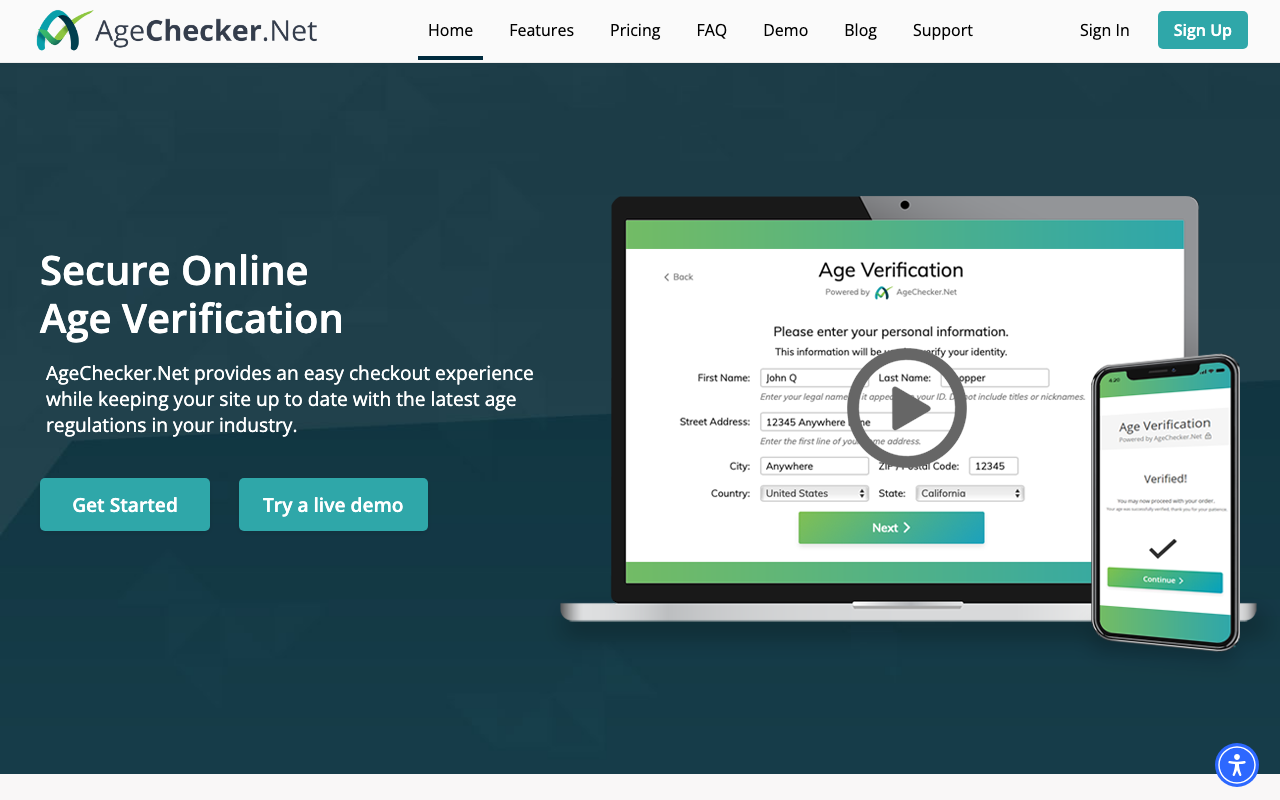
Not every regulated product routes to a dealer. For tobacco, vapor products, alcohol and many others, the rule at checkout is the buyer’s age, and AgeChecker.Net does that one job. It checks the name and address on your checkout form against public records and other sources. Its homepage says: “More than 90% of customers are verified instantly.” When it cannot match someone, it asks for a photo ID, which it verifies “in around 10 to 20 seconds.”
The rules are configurable: a universal minimum age, or requirements that vary by country, state, county, city or ZIP code. It offers industry profiles that update a site’s age requirements automatically as laws change, and it supports the major ecommerce platforms plus a developer API for custom sites, with free same-day installation.
Its pricing is the most transparent in this roundup: $25 a month plus 50 cents per accepted verification, with no contract and no setup fee.
Ideal for
Why they stand out
AgeChecker.Net prices age verification per accepted check and keeps the rules current by industry profile, so a small store can run a real check for a small monthly cost.
Pros
Cons
Verdict: pick AgeChecker.Net when the rule your checkout must enforce is the buyer’s age.
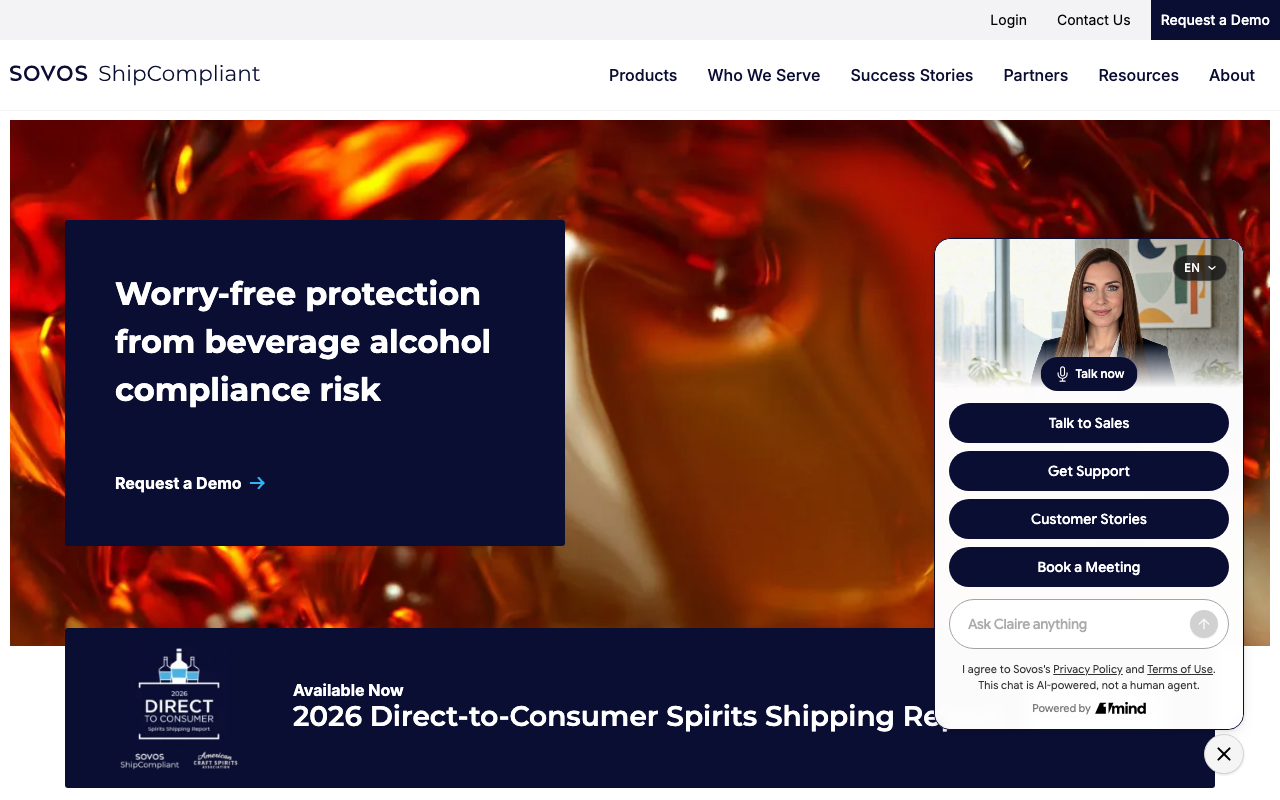
Beverage alcohol is regulated state by state, and Sovos ShipCompliant has served the category “since 2006.” It is a compliance platform, not a development firm, for wineries, breweries, distilleries, retailers and other producers and shippers.
For direct-to-consumer shipping, its site lists real-time compliance checks with integrated address and age checks, license management with alerts, tax rates “down to the address level,” and automated sales, excise and direct shipper reports. It connects to “60+” partners, including ecommerce, point-of-sale, wine club, fulfillment and the major carriers. It also covers the three-tier side: product and label registrations with more than 15 government systems, license deadlines and distribution reporting.
It does not publish a price; the site asks you to request a demo.
Ideal for
Why they stand out
ShipCompliant covers the whole compliance workload for alcohol, from the checkout check to the state reports, which no general store build does.
Pros
Cons
Verdict: pick Sovos ShipCompliant when you ship beverage alcohol to consumers and want the compliance work, not only the checkout check, handled.
Usually a plugin. If you sell firearms or ammunition on a mainstream platform and the rule is “ship to a licensed dealer,” AutomaticFFL or FFL API will do it for about $99 a month, and a build would cost more for the same result. If the rule is age, AgeChecker.Net is cheaper still. A build makes sense when the rule does not fit any product: your own platform, a catalog or fulfillment model a plugin does not handle, rules that combine product, destination and recipient in a way nobody sells, or enforcement that has to live inside a system you own and audit. That is the same line we draw for any custom internal tool or portal: buy what fits, and price the build only for the part that does not.
The buyer picks a licensed dealer near them, the firearm ships to that dealer, and the dealer completes the transfer in person. The reason is federal law: 18 U.S.C. 922(b)(3) bars a licensed dealer from selling or delivering a firearm to someone the dealer knows or has reason to believe does not live in the dealer’s state, with a narrow in-person exception for rifles and shotguns (18 U.S.C. 922, Cornell LII). Checkout has to send the order to a valid dealer, and the ATF’s own FFL eZ Check lets anyone confirm a license is valid: the user “needs only enter the first 3 digits and the last 5 digits” of the license number. A store that checks against an out-of-date copy of the dealer list is, as our case study puts it, worse off than one with no validation at all.
The rule moves from the recipient to the buyer’s age, and the age itself is set by law and can change. For tobacco, the FDA says the federal minimum age of sale rose from 18 to 21 in December 2019, and that since 30 September 2024 retailers must check photo ID for anyone under 30 buying cigarettes, smokeless tobacco and covered tobacco products (FDA, Tobacco 21). State rules sit on top. That is why a checkbox that says “I am over 21” is not an age check, and why a service that updates its rules by industry, or a build that keeps its rules in one place you can change, is worth paying for.
Ask any vendor these six questions, us included, before you buy or commission regulated checkout. They come from the constraints on our firearms compliance checkout page, the ones that make a regulated checkout a different engineering problem from a normal store.
| Result | What it usually means |
|---|---|
| Six passes | Buy it, or build it with this vendor. |
| Fails on 1 or 6 | The compliance risk is real. Do not go live on it yet. |
| Fails on 2, 3, 4 or 5 | It will work, at a cost in conversion or upkeep. Price that cost before you choose. |
Less than most owners expect when a product fits. From the published prices above: AgeChecker.Net at $25 a month plus 50 cents per accepted check, and FFL dealer routing from about $99 a month with AutomaticFFL or FFL API. A whole firearms store from Folio3 or MAKDigital is a quoted project; Folio3 puts a standard one at 8 to 16 weeks. A custom build starts with a fixed $2,500 System Spec at Razoyo, which returns a written estimate and a build or don’t-build call before anyone commits to the build. If a quote for this work looks large, our guide on how to tell if an agency is padding the scope shows what to ask.
For a whole firearms store on Shopify, BigCommerce or WooCommerce, Folio3. For the store and the marketing from one firearms-friendly team, MAKDigital. For FFL dealer data a developer can build with, FFL API. For an age check, AgeChecker.Net. For beverage alcohol shipped to consumers, Sovos ShipCompliant. For FFL dealer routing on a supported platform without a developer, AutomaticFFL. And if the rule does not fit any of these, or has to live inside a system you own, talk to us.
Who builds custom checkout for regulated and age-restricted products? Of the options in this roundup, Razoyo builds the enforcement as a custom system and runs its own FFL checkout product, AutomaticFFL. Folio3 and MAKDigital build whole firearms stores with compliance features. FFL API, AgeChecker.Net and Sovos ShipCompliant are services you plug in.
Do I need a developer to add FFL dealer selection to my checkout? Not on a supported platform. AutomaticFFL installs self-serve, with one click on BigCommerce and Shopify. FFL API publishes integrations for BigCommerce and WooCommerce and an API for developers who want to build their own.
How much does FFL checkout compliance cost? AutomaticFFL plans start at $99 a month after a 30-day free trial, and FFL API starts at $99 a month per site with a 14-day trial. A custom build at Razoyo starts with a free consultation and a $2,500 fixed System Spec.
Can I sell firearms on Shopify? Selling complete firearms on Shopify is effectively impossible under Shopify’s own policies. Ammunition is different, and AutomaticFFL is live on Shopify for merchants who sell it there.
Is an age gate pop-up enough for age-restricted products? No. A box a buyer can tick does not check anything. A real check matches the buyer’s details against records and asks for a photo ID when it cannot. The FDA requires retailers to check photo ID for tobacco buyers under 30.
Does a compliance plugin make my store compliant? No. It enforces the rules you give it. Which regulations apply to your products and markets, licensing, record keeping and reporting stay with you and your counsel.
When should I build regulated checkout instead of buying a plugin? When no product fits: your own platform, a catalog or fulfillment model a plugin does not handle, rules that combine item, destination and recipient, or enforcement that has to live inside a system you own.
If you are not sure whether a plugin covers your rule or you need something built, that is a free 30 minute conversation with a senior person, not a sales rep. Bring your platform and the rule you have to enforce. You will leave knowing whether AutomaticFFL, another product in this roundup or a custom build is the right move, before you spend a dollar. Schedule Free Consultation
Paul Byrne is President of Razoyo, a software engineering firm in The Colony, Texas taking prototypes and constrained systems into production since 2011.
These links open AI platforms with pre-written prompts about this page.
We use cookies to improve your experience. Do you accept?
To find out more about the types of cookies, as well as who sends them on our website, please visit our cookie policy and privacy policy.

