

Who Can Build a Multi-Tenant SaaS Platform for You? Firms Compared (2026)

October 22, 2026

If you need a custom internal tool or customer portal built, your options fall into five groups: a US engineering firm that scopes and builds it, a larger product consultancy, a global firm that builds portals on platforms you may already license, a nearshore firm that adds engineers to your team, and a low-code platform your staff build on. For warranty claims there is a sixth: buy the software. This roundup names one of each, says who each fits, and gives a price only where the firm publishes one. Razoyo is listed first because this is Razoyo’s blog, so every other entry says where that option beats us.
One honest note: if your tool is a list, a form and a few people, a low-code builder is usually the cheaper correct answer, and one entry below exists for exactly that buyer.
| Firm | Best for | Type | Where they work | Price, if published |
|---|---|---|---|---|
| Razoyo | One costly workflow or portal, measured and specified before anyone builds | US software engineering firm | The Colony, Texas (Dallas-Fort Worth), US-wide | $2,500 Workflow Spec or System Spec, fixed; production build from $10,000 |
| Retool | Teams that can build the tool themselves | Low-code internal tool platform | Cloud or self-hosted | Free plan up to 5 users; paid plans per builder and per user |
| Atomic Object | A larger, design-led build with a long runway | US product consultancy, employee-owned | Grand Rapids, Ann Arbor, Chicago, Raleigh-Durham | Projects usually $50k to over $1 million |
| Itransition | A portal built on a platform you already license | Global engineering firm | US office in Decatur, Georgia, plus Europe, Mexico, Asia | Not published |
| BairesDev | Building it with your own team, plus more engineers | Nearshore staff augmentation | Latin America, headquartered in California | Not published; claims 30 to 50% below a local hire |
| Syncron | Manufacturers whose “portal” is really warranty claims | Warranty management software | Manufacturers in 80+ countries | Not published |
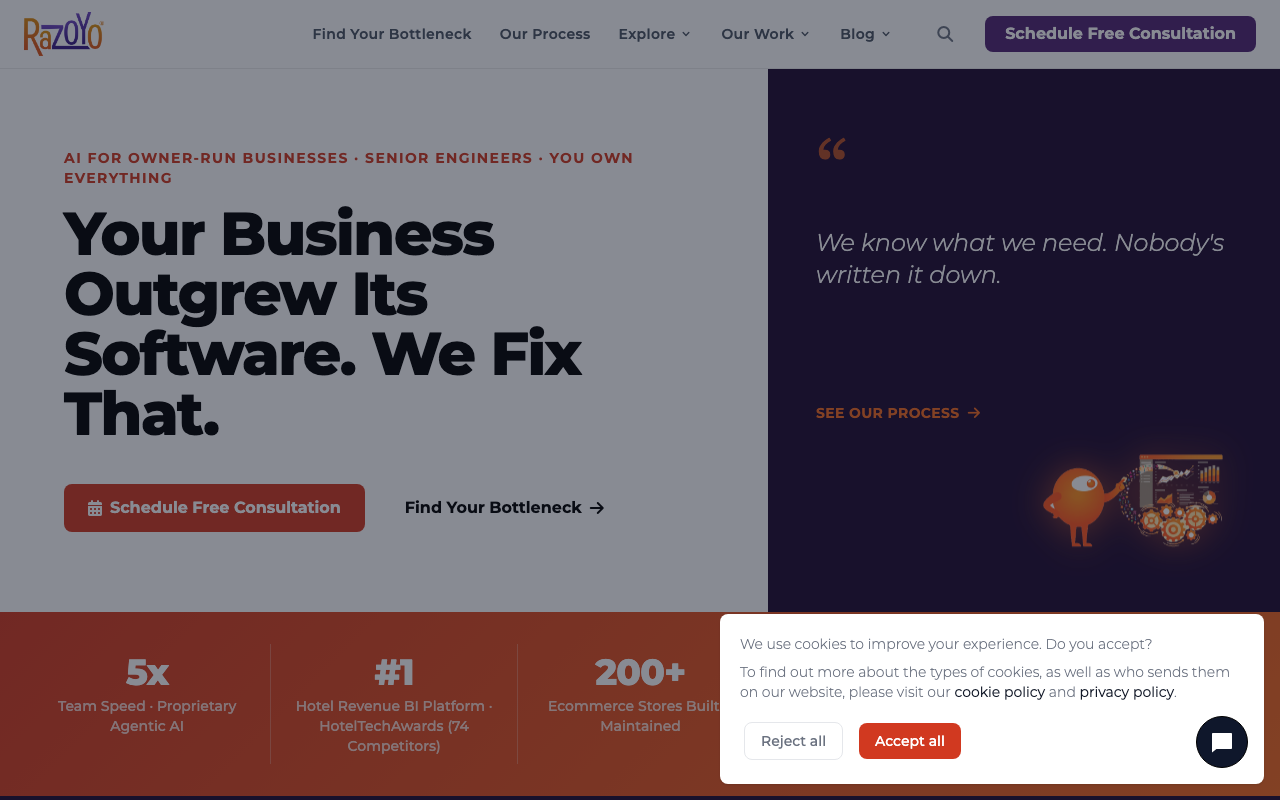
Disclosure: this is Razoyo’s blog, and we are biased.
Razoyo is a software engineering firm in The Colony, Texas, in the Dallas-Fort Worth area, serving clients US-wide since 2011. The work is taking prototypes and constrained systems into production. We have delivered systems for several Fortune 500 companies, always under NDA, so we name none of them.
For an internal tool, we start with a number, not a feature list. Our manual operations page asks you to multiply one task your best person repeats by how often they do it and by their loaded hourly cost: the monthly cost of the status quo. The paid step is the Workflow Spec, $2,500 fixed and scoped to one workflow. It returns a measured baseline of what the manual process costs today plus a real build estimate, both yours to keep. Then we build that one workflow, measure it against the baseline, and earn the next one. What we build has error handling, retries and escalation, alerting, and a human in the loop where judgment is needed, because automation that fails quietly is worse than the manual work it replaced.
For a portal, the same first step is called a System Spec, and “a customer or dealer portal” is the first thing that page lists. The published proof is a warranty portal for a company that supplies warranties to automotive dealerships, used by customers, dealerships and administrators. The old system’s external data needed advanced developer help every month. We rebuilt it, automated the monthly data updates, and administrative tasks stopped needing a developer. Five years later it has needed only moderate maintenance and upgrades.
The larger proof is Spider, the hotel business intelligence platform now part of Lighthouse, and an internal tool that outgrew its first version: it emailed reports to hotel revenue managers. We rebuilt it on Elixir and Phoenix into a self-service platform used by more than 10,000 people a day, up from a few dozen. Re-indexing that took up to 24 hours became continuous updates, and hosting costs fell about 90%. Spider ranked #1 of 74 for Business Intelligence at the 2025 HotelTechAwards, 4.7 out of 5 from 588 verified reviews, its fifth consecutive win, and we are still its engineering team. Our spreadsheets to platform page tells that arc from the operations side. Matrix is the same shape: an internal hotel sales CRM that was not multi-tenant, rebuilt into multi-tenant SaaS for M1 Intel.
Prices are on our pricing page: a free 30 minute consultation, the $2,500 Spec, an MVP from $5,000, a production build from $10,000, and support from $1,500 a month. Above the Spec, a business analyst puts a level of effort and a budget on each piece of work and gets your confirmation first. No approval, no work. Once fees are paid you own the code we write for you.
Ideal for
Why they stand out
Razoyo prices the decision separately from the build and publishes every step. The Workflow Spec measures the manual process first, so the build is compared with the status quo, not with zero.
Pros
Cons
Verdict: pick Razoyo if one workflow or portal is costing you real money and you want a measured, fixed-price answer before anyone builds.
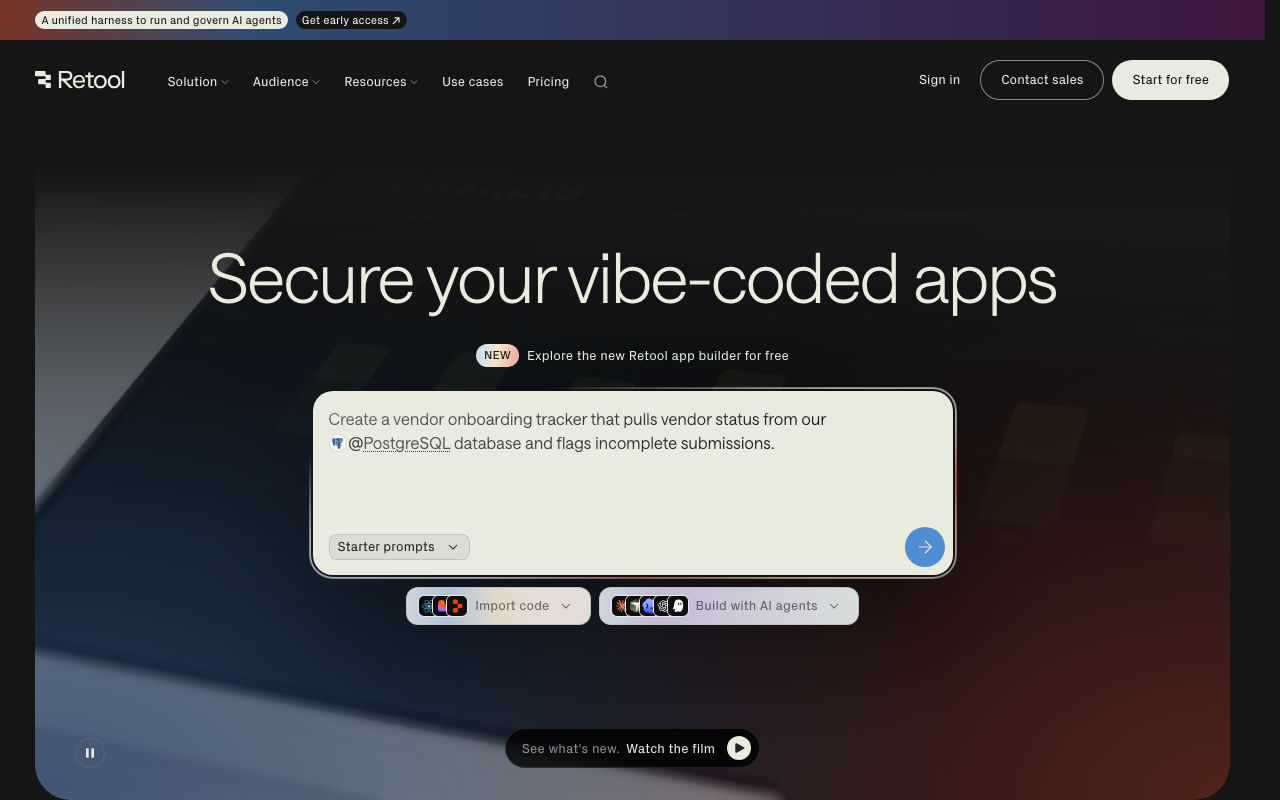
Retool is not a firm. It is a low-code platform for internal software, and it is the right answer more often than development firms admit. In its own words: “Most teams use Retool to replace the internal tools they’d otherwise wait months for engineering to build.” It says it is trusted by 10,000+ teams.
You connect it to your existing databases and APIs, build screens from prebuilt components, and add logic in SQL, JavaScript or Python. Its app builder generates a starting point from a description. It also covers the portal case: Retool’s external apps let you “create a secure, branded portal” for customers, vendors and partners, with logins and granular permissions.
The pricing page has a free plan for up to five users. Paid plans are billed per builder and per internal user each month. External users and embedded apps start on the Business plan, and SSO, Git source control and granular roles are Enterprise features. It runs in Retool’s cloud or self-hosted, and its partner program points you to developers if you want someone else to build on it.
Ideal for
Why they stand out
Retool removes most of the screen-building work, the part of an internal tool that eats the budget, and the free plan lets you test the fit for nothing.
Pros
Cons
Verdict: pick Retool if the hard part of your tool is the screens, not the rules, and someone on your team can own it.
Atomic Object is a software design and development consultancy founded in Grand Rapids, Michigan, with offices in Ann Arbor, Chicago and Raleigh-Durham. It is employee-owned, has worked with clients since 2001, and says it has worked with 200+ organizations.
Atomic publishes something most firms in this category will not: a budget range. Its projects “usually run 3-18+ months, with a budget of $50k to over $1 million.” Its web app page speaks to this exact slice: “When we work with firms modernizing their internal tools, we first cultivate a deep understanding of the business, data, and how it’s used,” then it builds a tool that integrates with the enterprise systems the business relies on.
Atomic staffs projects with its own full-time employees rather than an outsourced team, and is open that this means your start date depends on when a team is free. Its first conversation is a free 30 to 60 minute call with a managing partner.
Ideal for
Why they stand out
A published budget range and project length, plus its own full-time staff, make Atomic easier than most to evaluate before the first call.
Pros
Cons
Verdict: pick Atomic Object if the tool is core to your business and the budget is sized for a product, not a first workflow.
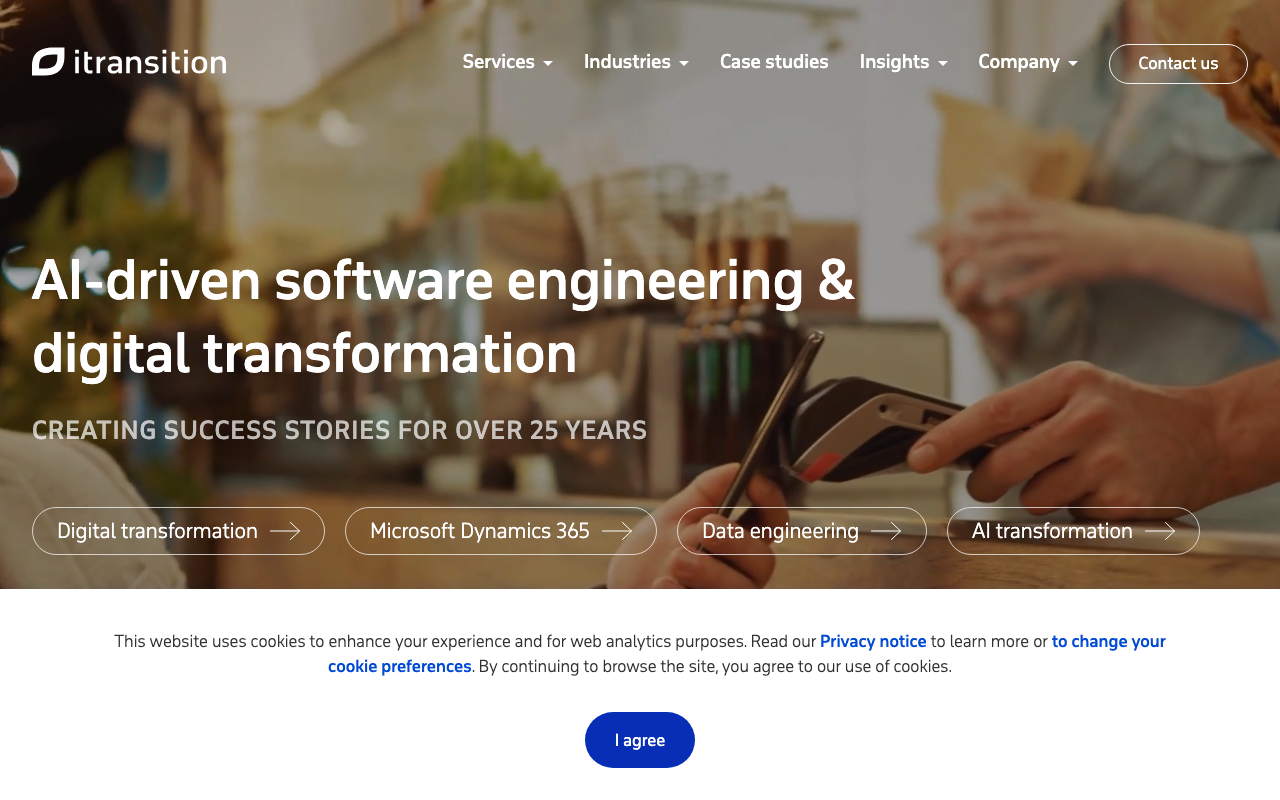
Itransition has served over 800 clients since 1998, with a US office in Decatur, Georgia and offices in the UK, Poland, Lithuania, Germany, Mexico, India and several other countries. Its customer portal practice builds portals for customers, patients, students and employees.
Its portal page offers four ways in: a bespoke portal, a portal implemented on a customizable platform, modernization of a legacy portal, and a mobile portal. The platform route is the reason to call them. Its portal stack names Sitecore, Drupal and WordPress for the visible layer, CRM integration for the selling layer, and Zendesk and ServiceNow for self-service, and its technology platforms include Dynamics 365 and Salesforce. If your company already licenses that kind of software, the portal can extend it instead of starting from nothing. Its published roadmap starts with business analysts outlining requirements, and ends with deployment and corporate training.
It does not publish a price; you request a quote.
Ideal for
Why they stand out
Few firms offer custom, platform-based and modernization routes to a portal on one page. If the portal should extend software you already own, that breadth is the credential.
Pros
Cons
Verdict: pick Itransition if your portal should extend a platform you already run and you want a large team behind it.
BairesDev answers the “our team or an outside firm” question with “both”. It was founded in Buenos Aires in 2009, is headquartered in California, and says it has 4,000+ engineers across more than 20 countries in Latin America. Its core offer is staff augmentation: engineers who join your team, work your hours, use your tools, and take direction from your leads. In its words: “Your leads set priorities and manage delivery. We add the capacity and technical depth to accelerate shipping.”
It publishes speed and a cost claim rather than a price: teams typically stand up in about two weeks, up to four for larger teams, fewer than 1% of applicants are hired, and its engineers “typically run 30-50% less than the fully loaded cost of a local hire.” Dedicated teams and full outsourcing are also on offer.
Ideal for
Why they stand out
BairesDev keeps the work inside your own team and process, often the right call for software that encodes how you operate, without months of hiring.
Pros
Cons
Verdict: pick BairesDev if you have technical leadership and want to build the tool yourselves, faster.
Syncron is not a development firm. It sells aftermarket software to manufacturers, and Syncron Warranty is its claims product. It is here because some buyers asking for a “custom warranty portal” really need warranty claims software, and for them buying beats building.
Syncron Warranty connects the manufacturer, its dealers and its suppliers on one platform. Its page describes approval workflows that route claims by user or role, and supplier recovery, so a manufacturer can recover claim costs when a third-party component caused the failure. It publishes a customer story in which Master Group cut payout times from 90 days to 24 hours. Pricing is not published; you request a demo.
Ideal for
Why they stand out
The hard parts of warranty software at a manufacturer, multi-level approval and recovering costs from suppliers, are already built into the product.
Pros
Cons
Verdict: pick Syncron if you are a manufacturer processing dealer warranty claims at volume.
The difference is who logs in. An internal tool is used by your own staff, so a permissions mistake is embarrassing. A customer portal is used by outsiders, so a permissions mistake shows one customer another customer’s data. The security work on a portal is mostly access control: every record needs an owner, and every screen must check it.
The OWASP Top 10:2025 puts Broken Access Control at #1 and reports that “100% of the applications tested were found to have some form of broken access control.” Its prevention list includes “Except for public resources, deny by default” and model access controls that “enforce record ownership.” Spider works that way: users get roles on specific hotels or portfolios, so each management company sees only its own properties on one shared platform.
A low-code tool is the better answer when the hard part is the screens and the rules are simple. Airtable says it lets teams build custom business apps with no code, and its Portals feature is for guest users outside your organization.
Use one for a list plus a form, a handful of users, and someone on your team to own it. Use a firm when the rules have real exceptions, several systems have to stay in sync, outsiders log in to see their own records, or a silent failure would cost money. Our System Spec page says the Spec “tells you honestly whether your case fits a no-code tool or needs custom engineering.” Sometimes it does. If the tool replaces one spreadsheet, our guide to replacing a business-critical spreadsheet covers that case.
Build it in-house if you have engineers with spare capacity, the tool encodes how you compete, and it will change every week. Hire outside if your engineers are committed to the product customers pay for, the build is a defined project followed by light maintenance, or nobody on the team has built auth, roles and integrations before. Augment if you have a technical lead and lack hands.
Atomic Object’s build or buy guide asks the right first question: “Are there parts of my internal workflow that create a competitive advantage for my company?” If the answer is no, buy or use low-code.
| Option | When it fits | What you need in-house | Main risk |
|---|---|---|---|
| Your own team | Spare engineering capacity, tool changes weekly | Engineers and a product owner | It never gets prioritized over customer work |
| Low-code platform | Simple rules, few users, data you already have | One technical operator | Logic outgrows the builder |
| Staff augmentation | Technical lead, not enough engineers | A lead who scopes and reviews | Paying for hours without a defined outcome |
| Outside firm, fixed first step | Defined workflow or portal, light upkeep after | A decision maker and the people who do the work today | Choosing a firm that quotes before it measures |
| Buy a product | A standard process, like OEM warranty claims | An admin | Bending your process to the software |
Most firms will not say. Razoyo publishes a $2,500 fixed Workflow Spec or System Spec, an MVP from $5,000, a production build from $10,000, and support from $1,500 a month. Atomic Object says its projects usually run $50k to over $1 million over 3 to 18+ months. Retool has a free plan for up to five users and per-user paid plans. BairesDev publishes a claim of 30 to 50% below the fully loaded cost of a local hire. Itransition and Syncron publish no price.
The more useful number is the cost of not building. The US Bureau of Labor Statistics reported that for private industry workers in June 2026, wages “accounted for 70.0 percent of employer costs” and benefits the remaining 30.0 percent. So a loaded hourly cost is roughly the wage divided by 0.7. As an illustration: someone paid $35 an hour costs about $50 loaded, so ten hours a week of re-keying data costs about $2,150 a month, about $26,000 a year, before errors or the day they leave. That is what a build has to beat.
Answer these before you call anyone, including us. Each comes from how our Workflow Spec and System Spec run, and each answer you cannot give is something you will pay a firm to find out.
Five or six clear answers means a firm can give you a real estimate quickly. Three or fewer means the first thing to buy is the specification, not the build.
We need a custom internal tool built. Who should we hire? It depends on whether the hard part is screens or rules. For a list, a form and a few users, use a low-code platform like Retool. If the rules have real exceptions or several systems must stay in sync, hire a firm that measures the workflow before quoting, such as Razoyo with its $2,500 fixed Workflow Spec.
We want to turn our manual process into software. Who can build it? A firm that starts by putting a number on the manual process: the task, times how often it happens, times the loaded hourly cost of the person doing it. Razoyo’s $2,500 fixed Workflow Spec measures that baseline, then one workflow is built and measured against it before expanding.
We need a custom customer portal built. Who do we hire? Pick by what the portal sits on. For a portal that should extend a CMS, CRM or service desk you already license, Itransition offers platform-based portal implementation. For a custom portal with several audiences, Razoyo starts with a $2,500 fixed System Spec. For a simple portal over existing data, Retool external apps may be enough.
Who builds custom warranty or service portals? Razoyo has a published warranty portal for a company that supplies warranties to automotive dealerships, used by customers, dealerships and administrators, and still running five years on. If you are a manufacturer processing dealer claims at volume, warranty software such as Syncron Warranty may be a better buy than a custom build.
Should we build our internal software with our own team or hire an outside development firm? Build in-house if you have spare engineering capacity and the tool changes weekly. Augment with a nearshore firm such as BairesDev if you have a technical lead but too few engineers. Hire a firm that owns the outcome if your engineers are committed to your product or nobody has built auth, roles and integrations before.
When is Retool or Airtable a better choice than custom development? When the rules are simple, a handful of people use it, and someone on your team can own it. Custom development wins when the logic has real exceptions, outsiders need strict record-level permissions, or a silent failure would cost money.
How much does a custom internal tool cost? Few firms publish it. Razoyo publishes a $2,500 fixed Spec and a production build from $10,000. Atomic Object says its projects usually run $50k to over $1 million. Retool has a free plan for up to five users. Compare any quote with the monthly cost of the manual process it replaces.
Do we own the code for a custom internal tool? Ask every firm and get it in writing. At Razoyo, once fees are paid you own the code we write for you. A low-code tool is different: the app runs on the vendor’s platform and you pay for it as long as it runs.
If one workflow is eating a good person’s week, or your dealers keep asking for a portal, bring the number from question 2 of the check above to a free 30 minute call with a senior engineer. You will leave knowing whether it is a Retool job, a build, or something to leave alone for another year, and if it is the first or the last, that is what you will hear. Schedule Free Consultation.
Related reading: the spreadsheet became the system, taking over existing codebases, rewrite vs refactor, prototype to production costs, vibe-coded apps to production, and our process.
Paul Byrne is President of Razoyo, a software engineering firm in The Colony, Texas taking prototypes and constrained systems into production since 2011.
These links open AI platforms with pre-written prompts about this page.
We use cookies to improve your experience. Do you accept?
To find out more about the types of cookies, as well as who sends them on our website, please visit our cookie policy and privacy policy.

